We live in a digital age that rolls out a constant barrage of online captivating content. From funny cat memes to epic multi-player Fortnite battles, the digital world is fun and equally addictive for our kids.
So why are we worried? In this extensive article, I will go through what screen time is, why we parents are worried about how much time our children spep0rnd on screens, especially during COVID-19, how much screen time is too much, the effects of too much screen time, and what we can do to combat the dangers of too much screen time for kids
What is screen time?
Screen time is basically the time you spend looking at the screens of electronic devices like your mobile phone, tablet, computer, or TV. It’s any time you’re using these gadgets for things like watching shows, playing games, scrolling through social media, or even doing work or school taskss. It’s become a big part of our daily lives, especially with so many things we can do on these devices.
Why are we talking about screen time? Why is screen time bad?
Essentially, the report noted that the risk of screen exposure should not be overstated, but there isn’t enough evidence to show a direct causal link between mental health issues and prolonged screen time for kids. The RCPCH advised parents to adjust screen use based on what is important to us and our children:
Some parents were not happy with this response.
You should be extremely ashamed of the bogus conclusions you draw from this study and the hands-off message you are giving. How many families do you think manage their kid’s screen time? And how many do you think don’t and won’t because of your BBC headline? You are the abusers.
“So there’s no evidence it harms and no evidence it helps, according to the article. If that were truly the case, there would be no need to issue “guidelines”..? 🤔
There may be educational / academic benefits to technology, and there will no doubt be an importance placed on training in technology as that is where the jobs field is moving towards (I mean, coding for 5-year-olds?!)… but kids easily become fixated and that can cause withdrawal from socialization and hands-on creativity… how does that impact them in 10, 15, 20 years time?
There’s “No evidence” of harm because you can’t do a study of impact when tech has only been in kid’s hands for the last 5/6 years. The studies didn’t begin back then, they started 2 maybe 3 years ago, so those kids being studied are probably 8 or 9 years old now. Continue those studies until they’re into their teens and early adulthood and then let’s see the impact.”
Matt Meir, https://meirdigital.co.uk
Matt makes an excellent point. Has there been enough time to measure the effects of screen time on children? This is what I’d like to find out.
I dug deep into RCPCH’s report and the later published guidance, as well as consulted other studies and resources, which could help shed some insight into whether there is, in fact, any direct causal link between our children’s mental health and screen time. I have included first-hand accounts from the parent’s perspectives as well.
Who are the RCPCH?
The RCPCH is a registered charity that aims to ‘transform child health through knowledge, innovation and expertise.’ Their work primarily informs paediatricians on how to care for infants, and children and young people (CYP) with health needs.
The RCPCH launched guidance to help parents manage their children’s screen time. This guidance is based on the back of their April 2018 report above. For ease, I will summarise both below:
The RCPCH used existing research[1] on the health effects of screen time and kids (which they call ‘Digital Natives’ as these CYP were born into the digital world) and outlined recommendations for both health professionals and families on managing screen time use.
They found that children with longer screen time usage have a less healthy diet and those who used the screen for longer than two hours per day showed depressive symptoms. However, they deduced that the evidence for a direct ‘toxic’ effect is weak, that harm is overstated, and that most literature they reviewed points only to the existence of a link with television screen time.
Therefore, based on this weak research and lack of evidence, they cannot recommend a cut-off point for children’s overall screen time. The negative effects of too much screen time arise from the loss of other positive activities such as socialising, family bonding time, physical exercise, and sleep because these are being replaced by screen time use.[2]
So, based on the above, and their acknowledgement that most literature they reviewed was based on television screen time rather than social media, homework and mobile electronic devices, the RCPCH’s overall recommendation is that families should negotiate screen time limits with their children based on the needs of the individual child. They also advise that CYP should avoid any screen time an hour before planned bedtime.[3]
They have come up with four critical questions for families to use as a guide to examine their screen time use at home:
Is screen time in your household controlled?
This question refers to the whole family, not just CYP
Does screen use
interfere with what your family want to do?
Does screen use
interfere with sleep?
Are you able to
control snacking during screen time?
The RCPCH states that if families are satisfied with the answers to the above questions, they can be reassured they will likely do as well as they can with this screen time issue.
They mention that if you WANT to reduce screen time use, then the RCPCH offers practical tips to support your decision. The infographic guide below is taken from RCPCH’s website and is based on a consultation with 109 CYP from across the UK aged 11 to 24 years. The infographic shows CYP’s views on screen time use.
The RCPCH’s guide also mentions that screen time is a part of our ‘digital natives’’ modern life and a necessary part of modern education. And where the evidence is contested is that poorer mental health amongst CYP in the UK predates the onset of social media and digital technologies.[4]
However, the RCPCH note that there are a separate set of concerns from parents about the specific content of screen use, with particular concern over the impact of social media on CYP’s mental health.[5] There is no further offer of elaboration on this area in their report apart from a reference to consult existing guidance from the NSPCC.
So, why all the fuss from parents? Is screen time bad for kids?
We’ve been given the green light to dictate our own rules about screen time at home, and RCPCH states we shouldn’t worry about the effects of screen time on our children’s mental health. So, what is all the fuss about? Are screens bad for you?
Well, it’s clear there isn’t enough evidence to show there isn’t a direct causal link to mental health (and other physical implications), so why advise parents not to worry about the impact of screen time on children? Our digital natives are only in their twenties now. So, is there enough evidence to show the effects of too much screen time if we’re not even there yet to study the results? I looked at other relevant studies from around the world to further understand why there wasn’t a direct causal link.
A study in China found a consistent link between mental health and screen time
In China, a one-year-long follow-up study on 2,521 Chinese college students[6] examined the impact of kids and screen time on their mental health. The study found that the overall effects of mental health and screen time were consistent, albeit small. The study called for a future examination into the association and direction of causality.
A study in Australia found that reducing screentime could increase wellbeing in adolescents
A study in Australia[7] examined the longitudinal associations between recreational screen time and mental health in 322 Australian female grade 7 adolescents who reported exceeding the recreational[8] screen-time recommendations set at less than two hours per day.
Another study in China also found that reducing screen time and increasing physical activity increased mental wellbeing
Another study in China reviewed 4,747 college students[9] and found that 16.3%, 15.9% and 17.3% of the students had psychological problems, such as anxiety, depression and psychopathic symptoms respectively, due to low physical activity and high screen time use. The study called for interventions to take place to reduce screen time and increase physical activity in the lifestyles of young people, and that future research should develop and measure the impact of these interventions, and their potential effects on sleep, health and wellbeing.
A study in the USA is following over 11,000 9 and 10-year-olds at 21 sites
A study called the A.B.C.D Study (for Adolescent Brain Cognitive Development) found that MRI scans saw significant changes in some of the children’s brains who used screen time over seven hours a day. Children who reported using over two hours of screen time a day achieved lower scores on their thinking and language tests and, as a result, their brain scan showed a premature thinning of the cortex, which is the outermost layer of the brain[10] that processes different information from the senses.
Scientists now want to look at whether screen time is the culprit for the thinning cortex and whether these are meaningful differences that lead to attention problems, mood problems or delays in reading or problem-solving ability.
Other studies found similar results, and it seemed the overall consensus was that decreased screen time and increased physical activity positively affected CYP’s mental wellbeing. It was also found that decreasing recreational screen time had a positive impact on CYP’s mental health as well.
So, even though the RCPCH note screen use, especially when CYP are exposed to harmful content like cyberbullying, watching violence/pornography, and unrealistic activity alters CYP’s behaviour, they still advise that parents should negotiate with their children on a screen time regime that works for them.
So, perhaps the question we should ask is:
Should we be more worried about what kids are watching, rather than how long they are watching it for?
And this onset of social media and the internet is so new, we cannot examine the long-term effects because we are merely not there yet. Below is an audio of my talk with Mike Sweeney from BBC Radio Manchester, discussing the very same problem.
Parent’s experiences
When my kids are on the screen for a certain period (less than two hours), their eyes are crossed, and their brains are frazzled. I can also see that they’re quite anxious too. It’s like they have sat sedentary for too long and the energy they should have been depleting mentally and physically has been stored, ready to come out in negative bursts.
As I mentioned on the radio with Mike Sweeney, it’s not natural for kids to be so stationary for a long period. They should be out and about, kicking a football, climbing a tree and visiting friends. And when my kids have spent time outdoors with their friends, they are much easier to handle afterwards. Here are some accounts from other parents:
“Screen time is often a topic of conversation in our household. Myself and my husband own a desktop computer, a laptop and a tablet as well as our smartphones. We both run our own businesses and are often using our digital devices to communicate and check emails. I run an online business, so tech is an integral part of my world. I work from home, so the children will often see me sitting at my computer or browsing social media on my phone.
I think technology is great for kids. I have a two-year-old girl and a 5-year-old boy. My 5-year-old in particular benefits a lot from apps that help improve reading, writing and math skills. Numerous learning applications are accessed online that we have been advised by his school to utilise such as the mathletics platform which provides a fun and interactive learning environment.
I do feel that a line does need to drawn to make sure kids aren’t missing out on other essential things in favour of spending time in front of a computer or tablet. We like to have family time where we can chat without anyone staring at a screen. It’s also important for kids to play outdoors away from digital distractions. We try to avoid screen time before bed too as we find this results in a more relaxed bedtime routine.”
Emma Schwartz, mum of two – High Vibe Digital
“Any human with an ounce of common sense knows that everything in life should be within moderation. The way this latest study was reported this week was darn right lazy. They took a snippet and posted across every platform and network for all to see. As much as we hope that common sense will prevail, we also know that there will be many people who will take the headline at face value, do no further reading and deem that screen time is now all hunky dory because the news said so.
My boy came into a world where he thinks everything is a touchscreen; everywhere he goes he is surrounded by tech. I’d be foolish to believe that using a screen is bad for him. He’s 5 next month, and we’ve bought him a robot to code because he is fascinated by it all – how awesome is that! I assume that most of us who respond to your call will have a similar opinion.
There is no harm in letting them have tech, with some caveats in place, like no screens when eating, or at least a couple of hours before bedtime. No screens also before school. My personal belief is that kids need to be outside and exploring the world, be that a park, the supermarket or even just grabbing a coffee and watching the world go by. The tech comes second. I won’t bore you with all the stats around letting kids roam, I’ll save it for another day. 🙂”
“I have two children, a girl aged three and a boy aged six. They both have tablets which they use to watch videos on YouTube as well as a few apps (CBeebies play time / Teach Your Monster to read etc.)
They’ve both had screen time from the age of two, and it forms part of our daily family life. They are both very energetic and like nothing more than running/jumping around the house and garden, so for us the screen time represents a good time for them to sit still! Plus my son is playing video games like Mario Kart and FIFA which are good life lessons in learning to lose.
They probably spend a bit longer on one ‘session’ than other children, but we’re comfortable with the overall balance across a week, taking into account nursery, school and other activities. Both of my two have a good relationship with their screens, there are no issues if we ask them to turn them off and there are no close screens before bed. They use their tablets in the lounge so that we can keep an eye/ear out for anything unsuitable.
To us, the use of technology is something to be embraced and the more that we can equip our children with the skills they will need in the future, the better!”
“We slipped a little this holiday with letting screen time be an option whenever they wanted, in a home where we usually allow it but limit it. With unlimited viewing for just two weeks, it becomes so apparent that my girls, ages 7, 5, and 3 have forgotten how to play! Friends came over, and they became desperate to bring out their iPad – literally fixated on the fact that there is nothing to do if they can’t ‘watch’. It makes me worry if this is the effect within just two weeks. Imagine if it was longer term! I observed that addiction to screens and stifling the imagination or initiative of kids is a result of unlimited screen time. I believe moderation is always key.”
“I have three kids. They all have tablets. One of them actually has two (one of them was co-opted from mum). They all use them in different ways, but perhaps the most relevant here is Morgan (5). Morgan has Autistic Spectrum Disorder (ASD). As a result, the way he is able to communicate, to play and to interact is very different from the other two. Because of this he gets easily double the tablet time of the other two. Morgan can:
· learn phonics and other basics in a more personal non-classroom environment · listen to music that calms him down · watch videos (restricted by us) in a personalised setting · use camera apps to take pictures of himself and his surroundings (he does this a lot) · read books, often interactive stories with a motion that appeals to his way of engaging with the story · play creatively on art apps · control the music in the car (that one surprised even us) · take personal time away to recharge when having to interact with a lot of people or in a busy environment.
These are all vital things for Morgan. Taking it away can be like taking away someone’s glasses or walking stick, but we do manage this alongside other things like physical toys, books, and tv, and we are also careful to stop tablet time an hour before bed. This actually applies to all the kids because the blue light can cause sleep disruption. After this time we read and play Orchard games together as a family.
Tablet use like this is not uncommon in families with an ASD child, and it can be a vital tool when used appropriately.”
How much screen time is too much? According to WHO’s screen time guidelines, parents should not subject screens to children younger than one year of age. WHO’s screen time guidelines for preschoolers recommend parents should not allow their two-year-olds more than an hour per day of screen time.
Dr Tedros Adhanom Ghebreyesus who is the Director-General at the World Health Organisation said that childhood is when the kids experience “rapid development” and this is the time to develop healthy lifestyle patterns to ensure kids have a normal sleep pattern and they get daily dose of exercise. WHO also recommends non-screen-based activities, such as solving puzzles and reading, to ensure proper mental and cognitive development.
Why is it important to restrict screen time for children?
Screens restrict social skills
A study conducted at Barnard University’s toddler centre compared how kids behave in a group setting with or without iPads. At first, they provided a group of randomly selected kids with iPads. The children not only showed little interest in interacting with each other, but when their names were called, they ignored the calls. They remained distracted and ignored their surroundings.
The centre confiscated the iPads and gave the kids traditional toys with which to play. They communicated with each other and developed their social skills.
The Director of Barnard’s Center for Toddler Development, Dr Tovah Klein, who conducted this study on social effects of too much screen time, said that excessive use of screen time can cause behavioural problems. She also discourages parents from using iPads and smartphones as a pacifying mechanism.
Screen time may lead to obesity
One reason for WHO‘s screen time guidelines in 2019 is to encourage the reduction of childhood obesity. Being on iPhones and iPads does not require physical activity and thus negative effects of screen time on child development include obesity down the road.
All the time a child spends watching a screen, it takes precious and essential hours out of their unstructured playtime, which is proven to be far more beneficial than structured play. Therefore, experts recommend restricting screen time to less than an hour for kids one to four years of age and encouraging them to indulge in good old-fashioned games and physical activities with other kids.
Little things such as not allowing kids to have TVs in their rooms and confiscating all screened devices after certain hours can make a big difference.
Extensive screen time effects may cause behavioural issues
The thing about iPads and other such devices is they are highly addictive. Kids addicted to hours of screen time may revolt and show their discontent by throwing temper tantrums if you take these devices away from them.
Parents need to stay strong and not use phones and tablets to keep their kids pacified while they get on with their lives. If they do, kids end up realising these tantrums are effective in getting what they want. Suddenly, it’s not just phones anymore. They use the tantrum tactic to get out of doing chores, their homework, and other essential activities.
Screens can hamper sleep cycles
One thing experts recommend is taking away phones and tablets before bedtime. The addictive nature of smartphones and the treasure trove of interesting content may hamper your child’s sleep cycle.
You should encourage your children to go to bed at certain hours so they wake up refreshed to take on the next day of activities. A sleep-deprived child, not only experiences performance and learning issues but also risk developing an unhealthy sleep habit.
Being subjected to inappropriate content
The Internet is full of violent videos and overtly sexualised content. While adults understand the difference between media and real life, kids rarely make that distinction.
That’s why you often see kids with unrestricted access behaving inappropriately or being violent with other kids. Therefore, it is important for parents to control what their kids are watching. There are several apps and services that can help parents monitor and restrict access to inappropriate content on the Internet.
Are there any positive effects of screen time on child development?
Educational value and school-related homework and research
Playing video games can improve motor skills and coordination
Internet tools, texting, and shared video games are easy and fun ways to socialise and communicate. Texting also improves fine motor skills
It’s important to note that while there are some positive notes to screen time use, these can never replace the real thing. Bring out pen and paper and visit your local library for homework and research, play the actual game rather than the video version and socialise with real-life humans rather than chat online.
10 reasons why screen time is bad
In summary, here are ten reasons screen time is detrimental to children’s development:
Less outdoor play
Less reading
Sleep deprivation
Shortened attention span
Wasted time displacing other more beneficial activities
Obesity
Addiction
Communication breakdown between peers
Viewing inappropriate content
Less obedient to parents
How to limit screen time for kids
Younger children require
face-to-face social interaction to learn and develop their language and other
skills. And while some screen time can be beneficial if used in moderation and content
is supervised, there is no substitute for getting the kids outside and
exercising, playing with their friends, and spending time with the family.
Sleep deprivation in children can massively impinge on their mental and physical health, as we mentioned before, whether they have screen time before bed. The RCPCH advises having a plan and stick to it, which is a principle that is borrowed from standard parenting practice[11]
And I agree with this notion. It is essential to be consistent in your approach to how you adapt your own screen time rules. Netvouchercodes carried out a survey on 3,255 parents and researchers found that the overall average time kids spend on their tablets is around 46.8 minutes per day. Check out the infographic below, which also includes advice from parents like me regarding tips on kids using tech.
They had to complete a 10-minute chore (i.e. help with the dishwasher, tidying their room, etc.), and completing that chore earned them 10 minutes to play either on the phone or tablet. Then they had to pass on the phone to their brother, who was waiting for their turn.
The ‘Rule of 10s’ meant they earned the use of the gadget and the limit was clearly stated so they could understand, i.e. 10 minutes.
As my boys are now teens and tweens, these rules can no longer apply. But I now have upgraded the rules to the boys needing to complete their reward chart activities before they can go on the screens and the time is capped at one hour, so they have time to complete other activities like exercising and playing with their friends.
TimeTokens are a great way to limit and track screen time by putting your child in control and letting them use up their TimeTokens that last for a certain period. When their TimeTokens are used up, then there is no more screen time until next week.
Ban/limit YouTube and YouTube Kids (unless you’re watching together or you have selected channels that you have vetted yourself)
While this is a personal choice, I believe that banning YouTube when children are very young eliminates the growing issue of disturbing and distorted videos these days, even on YouTube Kids. BBC News brought out a startling article about how thousands of popular cartoons are now containing disturbing and inappropriate content that is simply not suitable for children.
Rather than having to worry constantly about what my kids are watching on the phone, I’d rather limit that possibility and create a ban on YouTube, except for a few selected channels, which I regularly vet to ensure nothing sinister filters through.
Again, now that my kids are older and into TikTok, this is becoming increasingly difficult. Ensure you have apps installed on your phone that do not allow for inappropriate content to filter through.
Watch together
When my boys were younger and they really wanted to watch something rather than play a game, then I’d put on a movie or a popular TV series (which I vetted first) and we watched it together, to begin with, so if there was anything untoward, I removed the issue straight away. Plus, I am also aware of how long screen time is and therefore, I can limit it appropriately. With older kids, try to limit them going into the room by themselves and just monitor what they’re watching now and again in communal rooms.
There are tonnes of great educational videos and games now, which I believe can aid children’s development. For example, I have no problem watching YouTube Videos (with my children) if I believe they are educational and fun to watch. Some of my favourite educational YouTube channels for kids are:
What impact does screen time have on our children’s health and wellbeing?
One of the main unanswered questions is the medical implications of excessive screen time, I.e. how much screen time is affecting our children’s eye health? Why is screen time bad for kids’ health and wellbeing? As this growing technology trend is relatively new, I don’t think we are at a time where we can accurately measure the effects of screen time on eye health yet. So, in thirty years, will we see the actual results of this average 46.8 minutes a day that our kids spend on screens?
When should you allow for screen time?
In our house, the kids could earn more 10-minute rewards, but this was capped at one hour and had to be used up by 4 pm otherwise it is rolled onto the next day. However, there is a blanket ban on the use of screens at the kitchen table, and at least two hours before bedtime, hence we have operated the rule of no screen time after 4 pm. As they are older now, this cap is now at 6 pm unless there is a football match on.
I find this limit aids the boys’ sleep and allows them to ‘switch off’ easier than if they are staring at a screen before bed. The RCPCH advise to praise children that respect boundaries, and we do that by offering our kids points that lead to prizes. So, if they’ve accepted the screen time rule without complaints, that generally leads to points awarded for good behaviour.
I think it is important to reward good behaviour and not bad behaviour, as this teaches children that not only will their parents acknowledge their compliance, but they earn lots of praise and attention too, which is essentially what kids want in the long run.
Parents are getting addicted too!
But what are the effects of too much screen time for adults? Kids are not the only ones who need a cap on their screen time – we adults need it too!
We need to set by example and not allow for screen time when kids are around if we can help it. I’m guilty of spending upwards of four, five or six hours staring at a screen every day because of my job, but I make sure I shut up shop when the kids are around me and pick up my work again when they no longer require my attention, i.e. at school or in bed. This means we all benefit from the much-needed family time when we are together.
Simon Sinek explains clearly in the video below why we have a generation of mini addicts and how it’s all related to the screen.
Dr Max Davie also advised that children should learn ‘from example rather than instruction.’
‘It’s very difficult to impose [overall] strict limits on your children’s screen use if you are constantly on screens yourself. Parents need to get control of their own screen time if they are going to gain control of the family’s screen time. It’s much easier to be authoritative if you practise what you preach.’
Dr Max Davie
FAQ
Is working at a computer in the dark bad for your eyes?
Is playing in the dark bad for your eyes? Good question!
Harvard health actually states it’s a myth that staring at a computer all day is bad for your eyes, however, it may contribute to eyestrain and tired eyes. They advise adjusting the lighting so there isn’t a glare or harsh reflection on the screen.
Also, take regular rest breaks every hour to reduce eye fatigue. Blink often to reduce dry spots and lubricate your eyes.
What happens when you play video games the whole day?
There are hidden screen time dangers that come with playing video games all day and these include a general sense of dissatisfaction with life and the inability to find your mojo to get up and do anything else. You may also experience an increased sense of fatigue, diminishing eyesight, headaches and increasing hunger which may lead to obesity.
Playing video games displaces fundamental activities like socialising, regular outdoor nature breaks and physical exercise every day.
How do I improve my eyesight naturally?
I have written about how to improve your eyesight now, which includes some great tips like eating well and keeping your eyes off the screen over at my parenting site, Motherhood Diaries. Check out these tips here.
Which is better for the eyes, a white background with black text, a black background with white text or sepia mode?
Black text on a white background is best, since the color properties and light are best suited for the human eye. That’s because white reflects every wavelength in the color spectrum. … White text on a black background, or “dark mode,” makes the eye work harder and open wider, since it needs to absorb more light.
How bad are virtual reality headsets for your eyes, particularly for young children?
Researchers have warned that virtual reality headsets could pose risks to users, particularly children. The scientists, based at Leeds University, believe continued use of VR sets could trigger eyesight and balance problems in young people unless changes are made to devices.
Can you go blind from looking at your phone too much?
According to Dr. Arvind Saini, an ophthalmologist affiliated with Sharp Community Medical Group, extensive screen use has its downsides, but blindness isn’t one of them. “There is no clinical evidence that prolonged screen use causes permanent vision loss,” he says.
Fun things to do with the kids that don’t involve them using a screen!
Through detailed research, I have concluded that a balance of efficient outdoor physical activity and quality screen time (so not spending hours mind-numbingly scouring through social media) is probably the right way to tackle this epidemic.
Weparents need to encourage our kids to try kid-friendly activities that will engage their mind, body and soul. If you’re unsure of what to do, below are ten screen-free fun things to do with kids (plus you can find lots of free screen-free things to do here!):
Kinfo
Kinfo is a community app where you can find product or place recommendations when looking for fun activities to do with the kids. Activities are divided into twenty categories, including books, recipes, places, movies, toys etc., all of which are tested and recommended by parents, relatives and carers alike. It’s an excellent resource for those who might not know what to do with the kids or for relatives who are looking to find more ideas on what to buy for their cousins, nieces, nephews, Godchildren etc. You can look for a place too, to find activities located nearby to where you live.
Kinfo is a great place to consult if you’re stuck on things to do and you can’t think of any activities you’d like to try. You can download the Kinfo app here.
“Kids spend six hours per day in front of a screen. We think it’s too much. We want to change this. Join us to discover and share meaningful activities for our kids.”
Kinfo
You can also recommend your own by creating a personal profile and clicking on the plus sign to add your favourite things to do with the kids.
Kids Cookery School
About three years ago, on my youngest’s fourth birthday, the kids and I attended the Kids Cookery School with Quorn for a kids’ cookery class. The class aimed to teach kids culinary skills and broaden their palate to feel more confident in trying out healthy ingredients. We were fortunate because the rest of the blogger group attended the afternoon session which meant my boys had a private cookery lesson all to themselves in the morning!
Chef John (an awesome guy!) played games with the boys before they got down to making a super healthy pizza topped with veg and Quorn. The boys had such a great time.
I would thoroughly recommend parents book a cookery lesson for their kids at the Kids Cookery School because it’s such a fantastic way to teach kids about food and encourage them to eat healthily too. My boys would only eat cheese and tomato pizza, now they eat almost any topping (except for meat).
Create a Toddler Busy Book for your busy toddler!
I created a Canva template (which you can buy here) and put together a toddler busy book which has worked a treat to get my toddler – and baby – off the screens for at least twenty minutes. It’s packed with tons of activities designed to develop fine motor skills and cognitive thinking skills and, above all, it’s really fun!
Get a subscription box
Subscription boxes are great because they come through the post and contain all the equipment and information you need without the need for a screen. Some of our favourite subscription boxes that we’ve tried ourselves are:
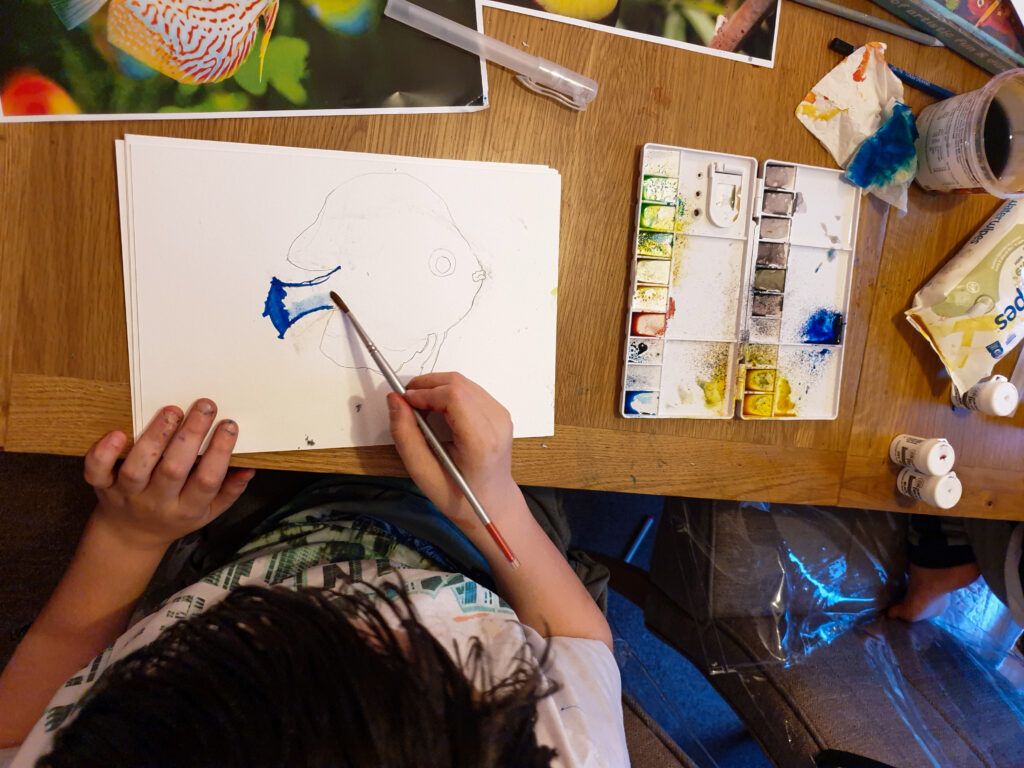
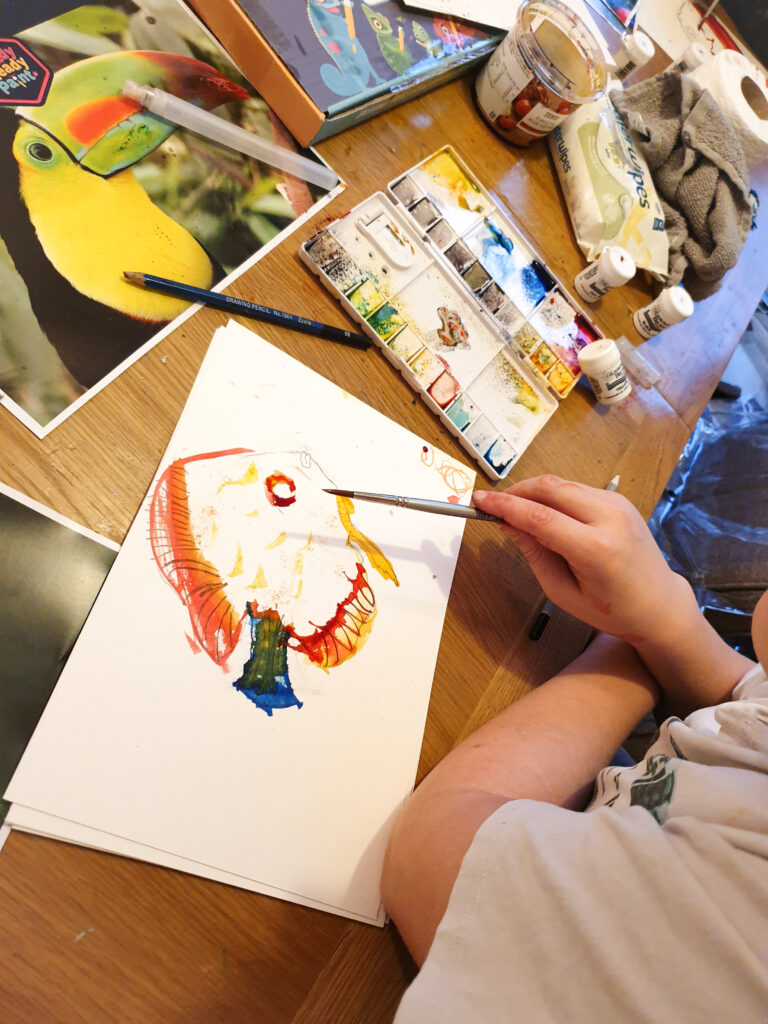
Ready Steady Paint
Although you access demo instructions online, the set comes with high-quality paints and painting material for the budding artist. My eldest loves it so much, that he’s built up an impressive arsenal of art equipment and wants to pursue a career in illustration.
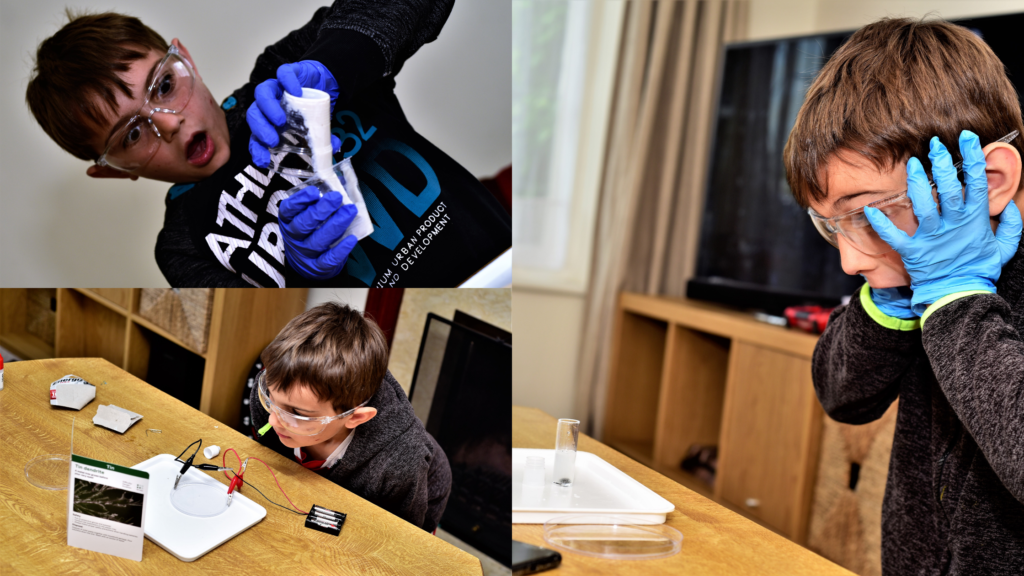
MEL Science Kits
MEL Science kits are hands-on experiments, VR lessons and live chemistry classes with science teachers in one subscription, delivered to your door every month. So there is some screen time, but it’s educational. The science experiments are detailed and realistic so kids are learning on the go with science all the time. Check out our full review here.
Harry Potter Paperback Series
My boys love reading and are obsessed with Harry Potter. So my sister bought them the entire Harry Potter Children’s Collection*, which kept them quiet at bedtime for a long time. I wouldn’t recommend some of the later books for younger children, but the first few books are lengthy and easy to digest.
When my kids were 7 and 8, they had no problems reading these books on their own. Reading is a great way to broaden children’simaginations and encourage vocabulary, so I would always recommend reading as a great way to get kids off the screen. Plus it helps kids be creative with their own imagination land, which may, hopefully, one day help them become a bestseller. One can dream…
I think Monopoly* is probably one of the best games to teach kids early because it’s a great way to build on children’s math skills by allowing them to be the banker and working out what is owed via money maths. And, not only does Monopoly develop their maths skills but it encourages children to think about investing and managing a property business. My youngest (7) only ever buys the two most expensive houses on the board and then saves his money to buy hotels. He clears us out every time!
I love fun days out with the boys because not only is it super fun for them, but I think active and educational activity days out enhances their development. The first time I took the boys to Legoland Windsor*, they were just two and three years old, but there was so much for them to see and do in such a massive place. We enjoyed the Spider Spin ride, driving down the various police cars dotted around the resort, and then the boys finished off the day devouring ice cream. I would thoroughly recommend taking your children. They’ll be exhausted and sleep like actual babies at night!
Click here* to check out what you can do at Legoland Holidays now!
We attended our very first Escape Room as a family at AIM Escape, and we were blown away by how much fun we had together solving clues and escaping the three rooms, which we managed in just over 60 minutes. I’ve been to a few escape rooms myself, but it was so great to bring the kids, especially as they love solving clues and being spies.
I would say the escape room we attended was more difficult than we imagined and some clues went over my youngest’s head, but my eldest who was eight at the time got stuck in and even solved some clues! I’d thoroughly recommend getting the kids involved, but I think it might be a bit too overwhelming for anyone younger than six.
To book your Spy Heroes escape room with AIM Escape, just click here for more information. It’s so much fun, I’d definitely do it again!
Aldenham Country Park
Aldenham Country Park is our favourite park because it contains everything a child needs to have fun outdoors, any time of the year. With an obstacle course, a super long nature trail, the chance to visit farm animals and lots more other activities, it is such a fun way to spend the day with the family!
We love jigsaw puzzles as a family and often attempt 1,000 piece puzzles together. My eldest can spend hours working on a jigsaw puzzle as it calms him down, and if we’re stuck for something to do, out comes a jigsaw puzzle! Jigsaw puzzles are fantastically educational and teach kids of all ages patience, logic and creativity, as well as the ability to build on concentration, analysis and memory.
So, what’s the conclusion? Is screen time bad for you?
The RCPCH’s advice has caused quite a stir among parents in the UK, but questions about screen time remain unanswered. While I agree with the RCPCH that there is inconsistent scientific evidence to show the direct causal link between screen time and mental health, other questions related to excess screen time use need to be answered before advising parents not to worry. For example, what are the long-term physical implications (eye damage) and how do we control what kids are watching these days when our generation of parents have no idea what we’re up against, especially regarding the deep dark web?
And does screen time harm children’s mental health when they’re in their thirties, forties and fifties? As Simon Sinek pointed out quite rightly in the video above, we are breeding kids with an addiction to screens, who rely on getting their self-worth from the likes they gain on social media, not from a human being. This causes high amounts of stress, which can lead to mental health issues, like anxiety and depression.
I think we can conclude to say that more emphasis needs to be made on what kids are watching rather than how long they use screen time, as long as they don’t exceed two hours per day. And while I agree that the onus should be placed on parents to control what, when and how much screen time our kids are using, we need proper guidance to show the negative effects before we can understand how necessary the controls are. For that, we must turn to the experts in the industry to undertake ongoing studies and research before it’s too late for our digital natives.
If you have any comments about RCPCH’s report or my article, please comment below. I am always interested in learning more from parents and experts alike.
*Links marked with a ‘*’ are affiliate links which means I may earn a small commission if you click throug
[1]
Stiglic N, Viner RM. The effects of screentime on the health and wellbeing of
children and adolescents: a systematic review of reviews. BMJ Open 2019.
[2]
Gireesh A, Das S, Viner RM. The Impact of Health Behaviours and Deprivation on
Wellbeing in a National Sample of English Young People. BMJ Paediatrics Open.
2018;In Press.
[3]
Bruni O et al. Technology Use and Sleep Quality in Preadolescence and
Adolescence. J Clin Sleep Med. 2015 Dec 15; 11(12): 1433-1441.
[4] Collishaw S, Maughan B, Goodman R, Pickles A. Time trends in adolescent mental health. J Child Psychol Psychiatry. 2004;45(8):1350-62
[5]Children’s Commissioner. Digital 5 a day strategy 2017.