Why cybersecurity is important for kids’ safety
If I had told you just 13 years ago (in my parenting infancy) that cybersecurity for kids would be at the forefront of our minds, you probably would have looked at me as if I had two heads. And so would I.
But cybersecurity in recent years has become a very real concern in an age where kids learn to swipe a screen before they tie their shoelaces or ride a bike. Digital playgrounds have opened up an avenue of amazing opportunities, with teen YouTubers becoming multi-millionaires and young entrepreneurs founding tech companies and opening millions of jobs for the digital industry. But equally, these opportunities have also built a vast platform for endless online hidden dangers for children.
As a parent navigating this digital landscape, I’ve come to realise just how crucial it is to stay vigilant. My 12- and 13-year-old boys are incredibly tech-savvy, and my younger girls are becoming more digitally curious by the day.
With kids spending so much of their time online, understanding why cybersecurity is important is a round-the-clock mission for parents like me. Between setting up parental controls, scouting apps, and monitoring chats, it can feel like a full-time job, but it’s a necessary one to ensure their safety.
So, in keeping with October being Cybersecurity Awareness Month, I’ve decided to break open the digital jar on cybersecurity and investigate the steps kids can take to have a safer online experience, as well as prepare for a promising and very accessible digital career ahead. Knowledge is power and this couldn’t be more gospel in the digital world.
What is cybersecurity for kids and why do we need to know?
The term ‘cybersecurity’ might evoke images of shadowy figures with masks behind computer screens, but for kids, it simply translates to the safety of their everyday online interactions. I wrote about internet safety’s importance here and even discussed how to keep kids safe on their phones with the Qustodio app here. But this article will focus on not just keeping kids safe from exposure to risks, such as cyberbullying, inappropriate content, and privacy breaches, but also how these powerful devices super-glued to kids’ hands can be tools for learning, creativity and even building a successful career.
But it’s concerning that schools aren’t keeping up. A US national survey found that less than half of schools offer any kind of cybersecurity education. So while our kids might be learning to code or create apps, many aren’t getting the basic skills they need to stay safe online. And that’s where we, as parents, step in.
Cybersecurity isn’t just for IT professionals or those shadowy figures in hoodies—it’s for everyone, including our kids. It’s about making sure they can explore their digital world with confidence, and maybe even turn those skills into something amazing down the line.
Beyond just safety, we should also open the conversation about introducing cybersecurity as a potential career. Tools like CodeHS Career Center, Startfield’s CyberStart, and WISP’s Careers in Cybersecurity and Privacy provide excellent opportunities for kids and teens to explore cybersecurity professions, giving them a head start in this growing field.
Raising awareness of why cybersecurity is important for kids’ safety with Girls Who Code
This October, in partnership with Girls Who Code and the Cyber Education Alliance, the #GetCyberSmart2024 campaign is taking centre stage for Cybersecurity Awareness Month and the goal is to spark curiosity about cybersecurity among K-12 students (that’s preschool through to sixth form for the UK folk). With support from 21 organisations dedicated to protecting kids online, this initiative offers a wide range of interactive resources—from puzzle books to lesson plans—to help students develop essential cybersecurity skills. It’s especially geared toward underrepresented groups, who often face a more significant risk of cyber threats.
But it doesn’t stop there. The Girls Who Code campaign provides resources for students, parents, and teachers, highlighting the importance of digital literacy and safe online habits. By starting cybersecurity education early, we’re not only keeping kids safer online but also setting them up for a more secure and resilient digital future. Check out GetCyberSmart.org to explore these tools with your child now.

PLUS, we are giving away a free Cybersecurity puzzle workbook, designed to educate teens and tweens on the importance of cybersecurity in such a fun way. Simply fill out the form below and grab your free workbook now!
The top cybersecurity risks kids face online
Our children face a multitude of online risks, from seemingly harmless game downloads that may harbour malware to social media platforms where predators may lurk. In fact, a 2023 report by the Cyberbullying Research Center found that 42% of kids between the ages of 10 and 17 have experienced some form of cyberbullying. Furthermore, 60% of children have been exposed to inappropriate content, according to a study by Internet Matters. The statistics are concerning, but, as I said before, knowledge is power and understanding the effective cybersecurity measures for devices, apps, and online behaviour is the first line of defence.
However, the digital age is constantly evolving and so should our approach to educating our children about online safety. When we hand our kids a tablet or phone, we’re giving them the keys to a vast, unexplored world. And while there’s so much good out there, we can’t ignore the darker corners of the internet. Cybersecurity is not a static field; the tools and threats are in constant flux, which means learning about digital safety is an ongoing journey.
But there are practical steps we can take to protect our children. Here are some of the biggest risks our kids face online—and strategies to help them stay safe.
Exposure to inappropriate content
The internet is rife with harmful content, including violence, adult material, and hate speech. One of the most unsettling risks is the possibility of our kids stumbling across adult material or violent content – and kids can easily land on these pages without even trying.
That’s where content filters come in. By setting up filters on browsers, apps, and even Wi-Fi networks, we can block access to inappropriate content and give ourselves a bit of peace of mind. It’s not a perfect system, but it’s a solid line of defence in protecting their digital world. Using content filters and supervising your child’s internet activity can also help shield them from such exposure.
Online predators
The idea of online predators is terrifying, but it’s a reality we need to confront. Predators often use social media, gaming platforms, and even seemingly innocent chat rooms to make contact with kids. They may start by posing as a friend or someone with similar interests, slowly gaining trust before attempting something harmful. The best way to protect our kids is to educate them about the dangers of sharing personal information online and to keep an eye on who they’re interacting with. Remind them that not everyone is who they claim to be, and that they should never share their location or personal details with someone they don’t know in real life.

Malware and viruses
Malware, short for ‘malicious software,’ is an umbrella term that includes harmful software like viruses, ransomware attacks, worms, and spyware, all of which are designed to disrupt, damage, or gain unauthorised access to computer systems.
Viruses, a type of malware, function similarly to biological viruses by attaching themselves to clean files and spreading to other systems. Once infected, viruses can corrupt files, cause systems to crash, and even prevent computers from starting. A notorious example is the ‘ILOVEYOU’ virus, which caused widespread reputational damage in 2000 by spreading through email attachments.
Other types of malware, like ransomware, take control of your files and demand payment for their release, while spyware secretly gathers your personal information. Each type of malware presents unique risks, but by understanding these potential threats, we can better protect our kids’ devices from infection.
Why it’s important to know the difference
Understanding the difference helps in choosing the right antivirus and anti-malware strategies. For instance, antivirus software specifically targets viruses, while anti-malware programs are designed to tackle a broader range of malicious software.
Teaching your child the distinction between these terms empowers them to better understand how to protect their devices. For example, knowing that not all malware is a virus means being aware that different strategies may be necessary to keep their personal and school computers safe.
Cyberbullying
Unfortunately, bullying has found its way into the digital space, and it can be just as harmful—if not more so—than what happens in the schoolyard. Cyberbullying can happen on social media, in text messages, or even during online games. It’s crucial to teach our kids how to recognise the signs, like repeated mean comments or feeling uncomfortable after certain online interactions. Encourage them to come to you if they feel targeted, and don’t hesitate to report any abusive behaviour to the platform itself. Keeping the lines of communication open is key—our kids need to know they’re not alone in dealing with these situations.
This form of bullying can deeply affect a child’s mental health, so act quickly and make sure your child knows how to report bullying incidents so they can feel supported by you and the educators handling these situations.
Phishing scams and personal information theft
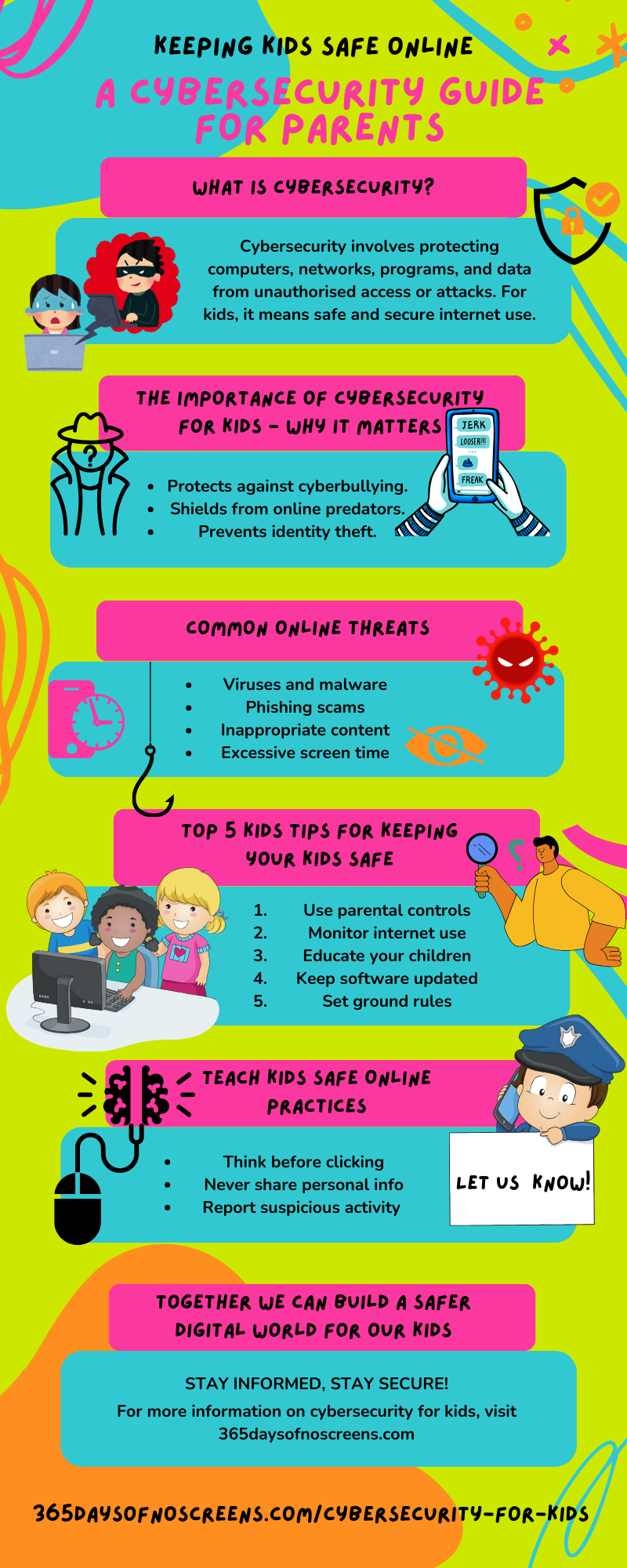
Children can be easy targets for phishing scams that trick them into giving away personal information, leading to identity theft.
These scams often appear as legitimate-looking messages or emails asking for personal information—like passwords or even credit card numbers. If kids aren’t aware of the dangers, they might unknowingly hand over this sensitive information. Teach your child the basics of digital literacy, such as not clicking on suspicious links or sharing personal information without asking a parent first, so you can prevent these kinds of attacks.
Addiction and screen time
Addiction to screentime is the main pain point of this website and a fast-track path to sleep disruption, a decrease in physical activity and a reduction of physical and mental health. Setting limits on screen time and encouraging a balance with offline activities can mitigate these effects.
Online gaming risks
Online gaming can expose your child to in-game purchases, interactions with strangers, and aggressive behaviour. Setting up controls on gaming platforms and engaging in discussions about the games they play can reduce these risks.
Legal and ethical concerns
Your child should know the legal implications of their online activities, including the consequences of downloading pirated content or engaging in digital piracy.
Digital footprint awareness
Teaching your child about the long-term implications of their digital footprint is vital. What they share online can affect future opportunities, such as university admissions or employment.
Role of artificial intelligence
Artificial intelligence (AI) and machine learning might sound like alien robots from the future, but they’re already playing a big role in keeping our kids safe online. These technologies are built into many of the devices we use every day, making things like parental controls and security systems smarter. They’re able to adapt and respond to new threats in real time, which means the tech is always learning and improving to keep up with the ever-changing online world.
As AI continues to evolve, its applications in cybersecurity are becoming even more essential. For parents and educators wanting to dive deeper, the CISA AI resource offers valuable insights into the ways AI is being leveraged to protect online spaces.
But at the end of the day, technology is only part of the solution. The real magic happens when we pair these tools with open conversations. By teaching our kids how to spot danger online and letting them know they can always come to us if something doesn’t feel right, we’re giving them the confidence to navigate the digital world safely. After all, their safety online is just as important as their safety in the real world.
Essential security measures for kids’ online safety
To keep your child’s digital experience safe, there are a few fundamental steps you should take across all devices, whether it’s a smartphone, tablet, or computer.
- Strong Passwords: Teach your child the importance of setting up strong, unique passwords. Avoid easy-to-guess passwords like ‘1234’ or ‘password.’ Encourage them to create longer passwords with a mix of numbers, symbols, and uppercase/lowercase letters. Password security is the first line of defence against hackers.
- Parental Controls: Use the built-in parental control features on devices like smartphones, tablets, and computers. These tools allow you to monitor app usage, limit screen time, and block access to inappropriate content. Whether it’s iOS’s Screen Time or Android’s Family Link, these features can help you protect your child’s online world.
However, these measures are not without their pain points. The fine line between respecting a child’s privacy and making sure they are safe is such a delicate balance that we often get wrong. Kids, especially teens, seek autonomy, and overly restrictive measures can lead to secretive behaviour or even rebellion.
So, the old adage, ‘If you can’t beat them, join them,’ fits perfectly here. And, the more kids know, the better suited they are to make the right choices, mirrored by, of course, how you act on a smartphone too. Kids don’t hear what you’re saying, but they do watch you. So make sure you set the right example for them too!
Secure online gaming
Online gaming is a big part of many kids’ lives, but it also comes with its own set of risks. Many games have chat features where strangers can reach out, and some allow in-game purchases that kids might not fully understand. To protect them, make sure you’ve set up age-appropriate gaming profiles and that chat features are restricted or closely monitored.
Teach your kids to be careful with who they talk to online—remind them not to share personal information like their name, age, or location. And set up spending limits or parental approval for in-game purchases to avoid any nasty surprises on your credit card bill.
Cybersecurity tools and resources for kids and parents
With so many resources available, it’s easier than ever to start teaching kids about cybersecurity in a way that’s fun and engaging. Let’s dive into some of the best tools both you and your child can use to stay safe online, while also sparking an interest in future career paths!
Interactive learning and cybersecurity games
If your kids love to learn by doing, there are plenty of interactive resources that can help them understand the basics of cybersecurity. The #GetCyberSmart2024 campaign, created by Girls Who Code and the Cyber Education Alliance, offers a variety of games and activities designed to introduce K-12 students to the world of online safety. You can find interactive tools like lesson plans, puzzles, and videos at GetCyberSmart.org.
This campaign brings together over 20 organisations, including Common Sense Media, Code.org, and CYBER.ORG, with a focus on helping underrepresented students develop critical digital skills. By exploring fun, hands-on activities like CISA’s Cybersecurity Awareness Month Puzzle, your kids can learn important security concepts while having fun at the same time.
Alongside CYBER.ORG, resources like CodeHS Career Center, Startfield’s CyberStart, and WISP’s Careers in Cybersecurity and Privacy are designed to help students, especially underrepresented groups, explore the exciting possibilities of cybersecurity. These tools make learning fun and accessible while opening doors to future career paths in tech.
Kid-friendly tech tools
Sometimes we need a little extra help when managing our kids’ digital activities. That’s where apps like Qustodio and KidzSearch come in. These tools offer safe, kid-friendly online experiences by filtering inappropriate content and giving parents more control over what their children can access.
For instance, Qustodio allows you to track what your kids are doing online, set screen time limits, and block certain websites. You can find more information about how Qustodio works here. Plus, KidzSearch provides a child-safe search engine that only shows kid-appropriate content, so you can let your kids explore the internet with peace of mind.
Cybersecurity puzzles and challenges
If your kids are more into hands-on activities, don’t miss out on our Cybersecurity Puzzle Workbook for Teens and Tweens. This workbook is loaded with puzzles that teach kids how to spot phishing scams, understand privacy settings, and protect themselves online. It’s designed to make learning about cybersecurity feel more like a fun game than a lesson. To get your free copy, simply fill out the form below.
For those who love a good challenge, consider signing them up for a cybersecurity competition through CYBER.ORG. These challenges offer students the chance to engage with real-world scenarios, like defending a virtual network from hackers. It’s a thrilling way to make learning about cybersecurity come to life while building critical thinking and problem-solving skills.
These resources, combined with engaging tools like Interland and CyberStart Go, provide a comprehensive and fun way to introduce your kids to cybersecurity while ensuring they’re prepared to navigate the digital world safely.
Raising awareness with cybersecurity campaigns
For parents who want to take things a step further, the Girls Who Code #GetCyberSmart2024 campaign is an incredible resource. Girls Who Code is a non-profit organisation dedicated to closing the gender gap in technology by empowering young women and nonbinary students with the skills they need to pursue careers in tech. They’ve reached over 500,000 students since their founding in 2012 and continue to inspire the next generation of coders, with a particular emphasis on diversity and inclusion.
Through the #GetCyberSmart2024 campaign, they focus on more than just teaching cybersecurity basics, Girls Who Code aims to ignite an interest in cybersecurity as a potential career, particularly for girls and other underrepresented groups in the tech field. This campaign ensures that kids from all backgrounds have access to vital cybersecurity education. To explore these resources and learn more, visit GetCyberSmart.org.
And for parents interested in fostering more collaboration at home, Common Sense Media offers fantastic resources on digital citizenship. These guides are perfect for starting conversations with your kids about privacy, online etiquette, and the long-term impact of their digital footprint. You can access their comprehensive guides here.
Conversation is key
No matter how many tools and controls we put in place, the most important thing we can do is talk to our kids. Make sure they understand the risks and know that they can always come to you if something feels off. Encourage them to be careful with what they share online, and explain why security measures like strong passwords and privacy settings are so important.
At the end of the day, keeping our kids safe online is all about balance. We want them to explore and learn, but we also want them to be protected from the real risks that exist out there. With the right tools, conversations, and a bit of vigilance, we can help them navigate the digital world safely and confidently.
Practical measures for everyday security
Implementing security settings on smartphones is the first step, but it’s just one piece of the cybersecurity puzzle for kids. Engage in conversations with your child about the importance of online safety and setting clear boundaries, as your active involvement can be more effective than any technological solution alone. For example, encourage your child to keep personal information private and problem-solve/report any uncomfortable online interactions to a trusted adult. Perhaps come up with a safe word if your child doesn’t want to or can’t actively report something concerning them online.
Using kid-friendly search engines and apps, such as Qustodio, KidzSearch and Kidgy, can also provide an additional safety net. These tools filter out inappropriate content and allow you to track your child’s internet activity without being invasive, so you can respect their trust and sense of responsibility.
From classroom to cyberspace
As cybersecurity threats continue to evolve, it’s essential that our education systems keep pace. We need to blend traditional educational values like wisdom and ethical understanding with the current demand for tech skills. For my kids, this means their education stretches from learning about historical events like the Trojan War to understanding modern issues like Trojan malware that could affect their mobile devices.
I do believe schools are starting to understand how important their role is in teaching cybersecurity. By bringing cybersecurity topics for kids like email security into everyday lessons, they’re preparing kids to identify and sidestep potential online threats. As children grow up, concepts like the difference between cyber security and information security will become as familiar to them as basic reading and writing skills.
Bringing parents and teachers into the conversation
It’s not just about getting kids involved—teachers and parents play a huge role too. The Cyber Education Alliance offers lesson plans for teachers, activities for parents to do with their kids, and tools that help everyone stay on the same page when it comes to cybersecurity. For example, CISA’s Cybersecurity Awareness Month Puzzle or The Diana Initiative’s Cyber Craft Series are great ways for parents to interact with their kids at home while teaching them about the importance of online safety.
Role-playing scenarios
Role-playing activities can also be a great tool. These activities can range from simple board games to elaborate digital simulations. Set up a scenario where your child plays the role of a cybersecurity expert and has to help a “client” (you, a sibling, or a friend) protect their online accounts. Maybe there’s a phishing email in their inbox, or they need to set up a strong password for their gaming account. Role-playing helps them think critically about online safety, and the hands-on approach makes the lessons stick.
As your child’s interest grows, consider engaging them in cybersecurity competitions, such as those offered by CyberStart or other platforms. These role-playing activities can simulate real-world cybersecurity challenges, helping children grasp complex concepts in a fun and interactive way.
Bringing cybersecurity into the classroom
Campaigns like #GetCyberSmart2024 and the initiatives from CYBER.ORG also focus on getting cybersecurity education into classrooms across the country. It’s no secret that schools are a bit behind when it comes to teaching these essential skills. But with these campaigns, teachers are getting the support they need to integrate cybersecurity into their lessons. From digital citizenship lesson plans to cybersecurity career exploration activities, there’s a real push to make sure kids are prepared for the digital world, both in terms of safety and future career opportunities.
A focus on community and future careers
It’s not just about protecting kids today—it’s about setting them up for the future. Campaigns like #GetCyberSmart2024 are helping kids understand that cybersecurity isn’t just something to think about when they’re online; it’s also a field filled with career opportunities. Organisations like Girls Who Code and CYBER.ORG are introducing students to the idea that they can be the next generation of cybersecurity experts. From ethical hacking to cybersecurity engineering, the future is bright for kids who take an interest in protecting the digital world.
How you can get involved
Of course, these campaigns don’t just leave the responsibility with schools. Parents play a huge role too. Many of the resources from the Cyber Education Alliance are designed to be used at home, giving you the tools you need to have meaningful conversations with their kids about online safety. Whether it’s working through a cybersecurity puzzle together or setting up parental controls on devices, these resources make it easy for families to get involved in raising cyber awareness.
At the end of the day, it’s about building a community that’s committed to keeping kids safe online. Campaigns like #GetCyberSmart2024 remind us that we’re all in this together, and with the right resources, we can help our kids navigate the digital world safely and confidently—while also opening doors to exciting future careers.
Awareness campaigns in schools during Mobile Security Month provide a springboard for year-round education. Children learn that their device is more than just a tool for games and socialising; it’s a gateway that requires vigilant guardianship.
Programs like Tech She Can offer educational cybersecurity resources for kids that empower parents and children alike. They highlight the need for strong “application security in cyber security” and the fact that a strong password on a smartphone is as essential as a sturdy lock on the front door. You can find some great resources on cybersecurity here as well as animated videos here.
Check out the video below from Tech She Can about Katie and Tex exploring cyber security.
Preparing kids for cybersecurity careers
We’ve talked a lot about keeping kids safe online, but here’s the exciting part: cybersecurity isn’t just about protecting them from risks—it’s also about opening up a whole world of career opportunities. The demand for cybersecurity professionals is booming, and it’s only going to grow as technology continues to evolve. So, while we’re teaching our kids how to navigate the online world safely, we might also be sparking an interest that could lead to a rewarding career in the future.
Cybersecurity: A fast-growing field
Let’s face it, the digital world isn’t slowing down anytime soon. With more businesses, schools, and governments relying on technology, the need for cybersecurity experts has skyrocketed. Cybersecurity professionals are the ones who protect companies and individuals from hackers, data loss and data breaches, and other cyber threats. And as cyber attacks become more sophisticated, so do the roles within this field. Whether it’s ethical hacking, cyber forensics, or network security, there are countless areas for kids to explore if they’re interested in tech and problem-solving.
Starting early: education and certifications
The best part about cybersecurity is that kids can start building their skills early. From learning the basics of coding to exploring how networks work, there are plenty of resources available to get them started and offer them a competitive edge against the rest. Programs like CYBER.ORG offer cybersecurity courses for students as early as middle school, allowing them to dive into topics like phishing attacks, data security, and network protection.
For teens, getting involved in cybersecurity competitions or challenges can be a great way to practice these skills in real-world scenarios. And as they progress, they can even start working toward cybersecurity certifications, which are key to landing a job in the field. Programs like the CompTIA Security+ and Certified Ethical Hacker (CEH) certifications are often the first step toward a successful career in cybersecurity. These certifications not only give kids a head start but also open up pathways to high-paying jobs in a field that’s desperately in need of skilled professionals.
Career pathways in cybersecurity
Cybersecurity isn’t just one job—it’s an entire ecosystem of roles that work together to keep our digital world safe. Here are a few of the most exciting career paths:
- Ethical Hacker: These are the “good guys” who test systems to find vulnerabilities before real hackers can exploit them. It’s like being a detective in the digital world—solving puzzles and cracking codes to protect sensitive data.
- Cybersecurity Engineer: These professionals design and build secure systems to protect against attacks. They’re the architects of the digital world, creating everything from secure networks to firewalls that keep threats at bay.
- Incident Responder: When a company experiences a successful cyber attack, the incident responder is the one who swoops in to contain the breach and figure out what went wrong. It’s a fast-paced, high-pressure job that’s perfect for someone who loves problem-solving.
- Security Analyst: These experts monitor networks and systems for suspicious activity, ensuring that any threats are caught before they become serious. It’s a crucial role in any organisation that relies on information technology.
Inspiring the next generation
Campaigns like Girls Who Code’s #GetCyberSmart2024 and initiatives from CYBER.ORG are doing more than just teaching kids how to stay safe—they’re inspiring a new generation of cybersecurity professionals. These programs show kids that cybersecurity is a dynamic, exciting field that’s full of opportunities. And with the skills gap in cybersecurity growing, there’s never been a better time for young people to get involved.
How you can support your child’s career in tech
As parents, we can play a big role in supporting our kids’ interest in cybersecurity. Encourage them to explore coding, problem-solving games, and online courses that teach the basics of cybersecurity. Look into local cybersecurity clubs or online challenges where they can practice their skills and meet like-minded peers. And don’t forget to talk to them about the real-world impact of cybersecurity—how professionals are keeping businesses, governments, and individuals safe every day.
The future of cybersecurity is bright, and by introducing our kids to these opportunities early, we’re not just helping them stay safe online—we’re setting them up for a future where they can thrive in a field that’s full of potential.
All this tech learning for your child is paving the way for a whole new career in the digital world. And the cybersecurity careerspace is not just a field of ones and zeroes—it’s a dynamic and fast-evolving arena where vigilance and creativity are at the top of the skillset. For my two boys, I want them to understand that their actions on their iPhones can lead to real-world consequences, but it can also prepare them for future roles in the cybersecurity ecosystem.
Final thoughts
As parents navigating the digital world with our kids, it can be overwhelming to balance online safety with the freedom to explore the amazing opportunities the internet offers. But by incorporating some simple, practical steps—like using parental controls, monitoring online activities, and teaching about privacy and security—we can give our children the tools they need to thrive in this digital era.
Cybersecurity isn’t just about keeping kids safe from the risks of today. It’s about preparing them for the future, empowering them with the knowledge and skills to be responsible, cyber-smart citizens. Whether it’s through engaging in family discussions, exploring educational resources like our Cybersecurity Puzzle Workbook for Teens and Tweens, the plethora of tools and resources over at getcybersmart.org or encouraging participation in cybersecurity competitions, we can all help shape a generation that is not only safe but also prepared for the vast opportunities that lie ahead in the tech world.
Ultimately, open communication, education, and a little tech-savviness will go a long way in ensuring that our kids grow up in a digital world that is as exciting as it is secure.
FAQ
1. What are the biggest online risks for kids?
The major online risks for kids include exposure to inappropriate content, cyberbullying, online predators, and phishing scams. These risks can lead to serious issues like privacy breaches, emotional harm, or even identity theft. Setting up content filters, teaching kids to recognise and report bullying, and helping them understand the importance of privacy are crucial first steps in keeping them safe online.
2. How can I teach my child about cybersecurity without overwhelming them?
The key is to make cybersecurity education fun and age-appropriate. Use resources like cybersecurity puzzle books, interactive lessons, and games that introduce concepts in a way that feels more like play than a lesson. For older kids, consider role-playing scenarios or cybersecurity challenges that let them apply what they’ve learned in real-world situations. Starting small, like explaining why strong passwords matter, and building from there helps kids feel confident without feeling overloaded.
3. What tools can help me monitor my child’s online activity?
There are several apps designed to help parents monitor their child’s online activity without being invasive. Tools like Qustodio, Net Nanny, and Google Family Link allow you to set screen time limits, block inappropriate content, and track what apps or websites your child is using. You can also use the built-in parental controls on smartphones and gaming consoles to keep their digital world safe.
4. How do I protect my child from cyberbullying?
Start by having an open conversation with your child about what cyberbullying is and how it can happen. Encourage them to speak up if they ever feel uncomfortable or threatened online. Teach them how to block or report bullies on social media or gaming platforms, and always monitor any changes in their behavior that might indicate they’re being bullied. Regularly check in with your child to make sure they’re not facing online bullying alone.
5. What should I do if my child encounters a phishing scam?
Teach your child how to recognise a phishing scam by looking for red flags like emails or messages asking for personal information, suspicious links, or strange-looking email addresses. If they encounter one, make sure they know to avoid clicking on any links or sharing any personal details. You should also report the scam to the relevant platform or email service. Installing antivirus software and enabling two-factor authentication can provide additional layers of protection.
6. How can I encourage my child to pursue a career in cybersecurity?
Start by introducing them to the basics of cybersecurity through coding games, puzzle books, or cybersecurity competitions. As they show more interest, encourage them to explore online courses or attend cybersecurity camps. Programs like Girls Who Code’s #GetCyberSmart2024 or CYBER.ORG offer great resources to help kids get started. If they’re serious about it, look into cybersecurity certifications that can give them a head start on a future career.
7. Why is cybersecurity important for kids?
Kids spend a lot of time online, whether it’s for school, games, or social media. Cybersecurity is important because it helps protect them from dangers like cyberbullying, identity theft, and online predators. Teaching kids the basics of online safety ensures they can explore the digital world confidently while staying secure.
8. At what age should I start teaching my child about cybersecurity?
It’s never too early to start! Even young children can learn about basic online safety, like keeping their passwords private or recognising when something feels “off” online. As they get older and start using the internet more independently, you can introduce more complex topics like phishing, data privacy, and the importance of strong passwords. By the time they’re teens, they should have a solid understanding of how to stay safe online.
9. How do I balance protecting my child online without invading their privacy?
Finding that balance is key. While tools like parental controls and monitoring apps are helpful, it’s important to also build trust through open communication. Let your child know why these safety measures are in place and encourage them to come to you with any concerns. The goal is to protect them, not control their every move, so make sure they understand that their safety is your priority.
10. What are the most important cybersecurity skills kids should learn?
At a basic level, kids should understand the importance of strong passwords, how to recognize phishing scams, and the dangers of oversharing personal information online. As they grow older, they can start learning more advanced skills, like network security, data protection, and how to protect against cyber attacks. Encouraging kids to develop critical thinking and problem-solving skills is also key in preparing them for a future in cybersecurity.
Teaching online safety and privacy
- What are some effective strategies for teaching children about online safety and responsible internet use?
- What are the best ways to teach children about online safety and privacy?
- How do you teach kids about cyber safety?
- How to teach young kids about cybersecurity?
- How do you explain cybersecurity to a child?
Answer:
Use engaging and interactive methods such as games, busy books, stories, and practical examples to teach your child about online safety. Emphasise the importance of privacy, recognising unsafe situations, and proper online behaviour. More detailed approaches can be found in the sections titled “Teaching kids about cybersecurity – engaging methods for young minds” and “From classroom to cyberspace” in the article above.
Protection and security measures
- What are some effective ways to protect children online without compromising their right to privacy?
- How do I keep my kids safe online across all their devices?
- How do I protect my child’s personal information on Facebook?
- Your kids are online. How do you keep them safe on social media?
Answer:
Smartphones are central to most kids’ online activity, so it’s important to secure these devices. Refer back to the section on Essential Security Measures for guidance on setting up strong passwords and enabling parental controls. On both iPhones and Android devices, you can take advantage of features like screen time monitoring and content blocking to ensure a safer experience for your child.
Understanding cybersecurity
- What is cybersecurity for beginners?
- Why do we need cybersecurity?
- Why is cybersecurity necessary?
- Why is cybersecurity important for kids?
Answer:
Cybersecurity involves protecting internet-connected systems and personal information from cyber threats. It’s crucial for everyone, including your child, to understand and utilise cybersecurity to prevent identity theft, cyberbullying, and other online risks. The “What is cybersecurity for kids and why do we need to know?” section above provides a beginner-friendly overview.
Cybersecurity education in schools
- Why do you think cybersecurity awareness should be taught at schools or why not?
- Should cybersecurity be taught in schools?
- How do you teach cybersecurity to elementary students?
- How can a teenager learn cybersecurity?
Answer:
Cybersecurity education and the importance of security education is essential in schools to prepare children for the digital world. It should be integrated into the curriculum to teach children from a young age how to navigate online environments safely. This article discusses the importance of this in the “From classroom to cyberspace” section, and offers insights on the benefits of cybersecurity education for different age groups.
Career preparation and awareness
- What is the best way to prepare an 8-year-old for a career in cybersecurity?
- Careers in cybersecurity
Answer:
Start with basic concepts and as they age gradually introdunetce more complex topics of cyber security in higher education. Engaging them with age-appropriate cybersecurity tools can spark interest and lay a foundation for a potential career in cybersecurity. The “Careers in cybersecurity” section above discusses various roles within the field and how to foster an interest in these areas from a young age.
Miscellaneous questions
- Will cybersecurity become obsolete?
- What programs do cyber security use?
- When was cyber security introduced?
- Why was cyber security created?
Answer:
Cybersecurity will not become obsolete as long as there are cyber threats, which are likely to increase as technology evolves. Cybersecurity uses a variety of tools designed to protect networks, devices, and personal data from unauthorized access or attacks, for example email security in network security. The field has evolved significantly since its introduction, primarily developed in response to the increasing dependence on digital systems and the associated risks detailed throughout this article.
References
- Family Online Safety Institute (FOSI): Provides free cybersecurity resources for parents to help ensure their children’s safety online. They offer a variety of tools and essential tips for talking to kids about cybersecurity managing family online safety.
- Common Sense Media: A trusted resource for families and schools, offering reviews and ratings for various media, as well as a wealth of articles on online safety and digital citizenship.
- Cyberbullying Research Center: Offers up-to-date information and research on cyberbullying among adolescents, which can be an aspect of cybersecurity for kids.
- NetSmartz: Created by the National Center for Missing & Exploited Children, it provides resources on internet safety for children, parents, educators, and law enforcement.
- ConnectSafely: A nonprofit dedicated to educating users of connected technology about safety, privacy, and security.
- “Children’s Internet Usage and Outcomes: A Systematic Literature Review from 2005 to 2014” by Bojana Lobe, published in the journal Cyberpsychology: This study provides an analysis of children’s internet use and its outcomes, which may be relevant for the blog post.
- “The 2020 Childhood Report” by UNICEF: Although not exclusively about cybersecurity, it discusses the digital landscape’s impact on children’s rights and safety.
*The feature image was created by DALLE AI Image Generator that depicts a digital playground where children are engaging in vsenarious online activities, overseen by protective parents and symbolic cybersecurity measures. This scene illustrates the balance between the digital opportunities available to kids and the vigilance required to keep them safe online.
*This post is sponsored by Girls Who Code
About the author – As a mum of four tech-savvy kids, I’ve spent years navigating the complexities of parenting in a digital age. With over a decade of experience writing about family life and digital safety on Motherhood Diaries, I am passionate about helping parents protect their children online while encouraging them to explore the amazing opportunities the digital world offers. Through my blog and personal experiences, I aim to provide practical, trustworthy advice for raising children in today’s connected world. Check out our shop here for more ways to balance screentime!