little ones, big fun
34 problem solving activities for toddlers on Etsy
Toddlers run a mile a minute and we adults can’t always keep up. But, when you engage their sponge brains with an activity that involves problem-solving, they can calm down pretty quickly. This is because toddlers are meant to be curious, active, and borderline crazy. So, if we feed their brains with things that keep them busy and help in cognitive development, we can create smart, happy toddlers – and I’ve found just the thing! Here are 34 screen-free problem solving activities for toddlers that you can find on Etsy and are so cute, your toddler will love them!
But first, what is problem-solving?
Problem-solving involves critical thinking, creativity and logical reasoning, which helps us identify challenges and determine the best ways to tackle them. Learning to solve problems is especially important for toddlers because it builds a foundation for their future cognitive abilities.
For toddlers, problem-solving isn’t just about fixing specific issues. It’s about developing crucial skills that will help them throughout their lives. Here’s why it’s so important:
- Cognitive Skills: Activities that involve problem-solving can enhance memory, attention, and reasoning abilities.
- Fine and Gross Motor Skills: Many problem-solving activities also help improve physical coordination and dexterity.
- Critical Thinking: Your toddler learns to think logically and evaluate different solutions.
- Creativity: Problem-solving encourages innovative thinking and the ability to come up with new ideas.
- Social Skills: Engaging in problem-solving activities with others helps build teamwork and cooperative play.
Top 34 problem solving activities for toddlers
You can divide problem-solving activities into seven categories: physical, cognitive, social, creative, fine motor skill, sensory, and logical reasoning activities. Each category targets different developmental areas, so they offer a well-rounded approach to learning. We’ll go through each activity and find an item on Etsy that fits the bill.
Physical activities
1. Building blocks
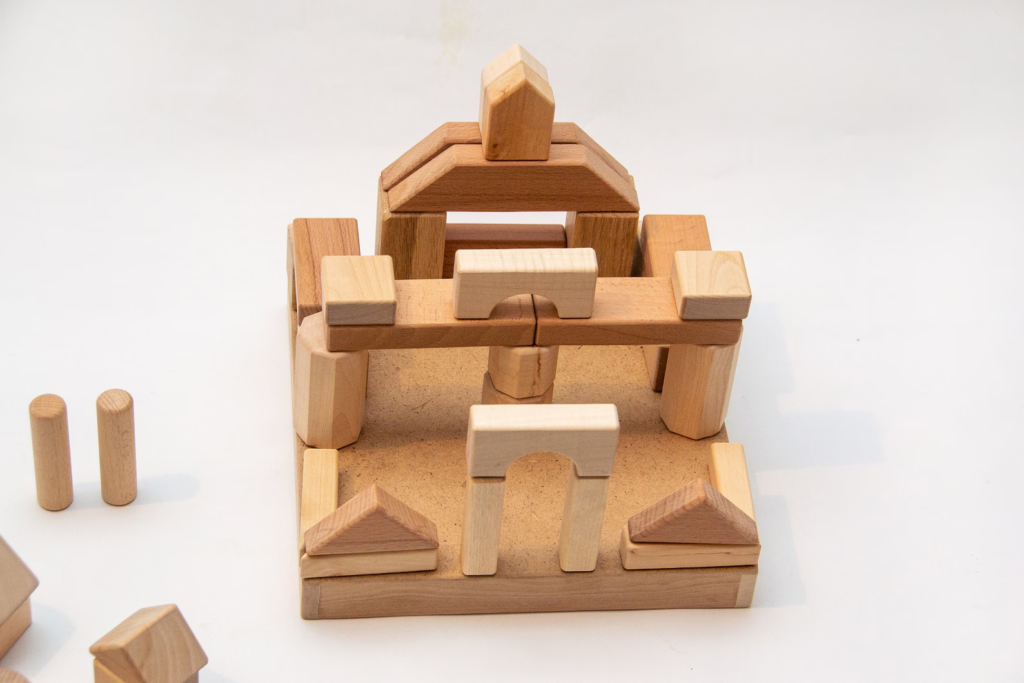
Using different shapes and sizes to build structures with wooden building blocks is a fantastic way for your toddler to develop spatial awareness and problem-solving skills. As they stack and arrange the blocks, they learn about balance, symmetry, and the fundamentals of construction.
Your toddler can be creative and experiment with different configurations when building blocks, which also helps them understand concepts of cause and effect, as they see how the arrangement of blocks affects structure and stability. Get siblings or friends/family involved and this becomes a collaborative activity.
Check out the Wooden Building Blocks Set available on Etsy, which offers your toddler hours of fun!
2. Obstacle courses
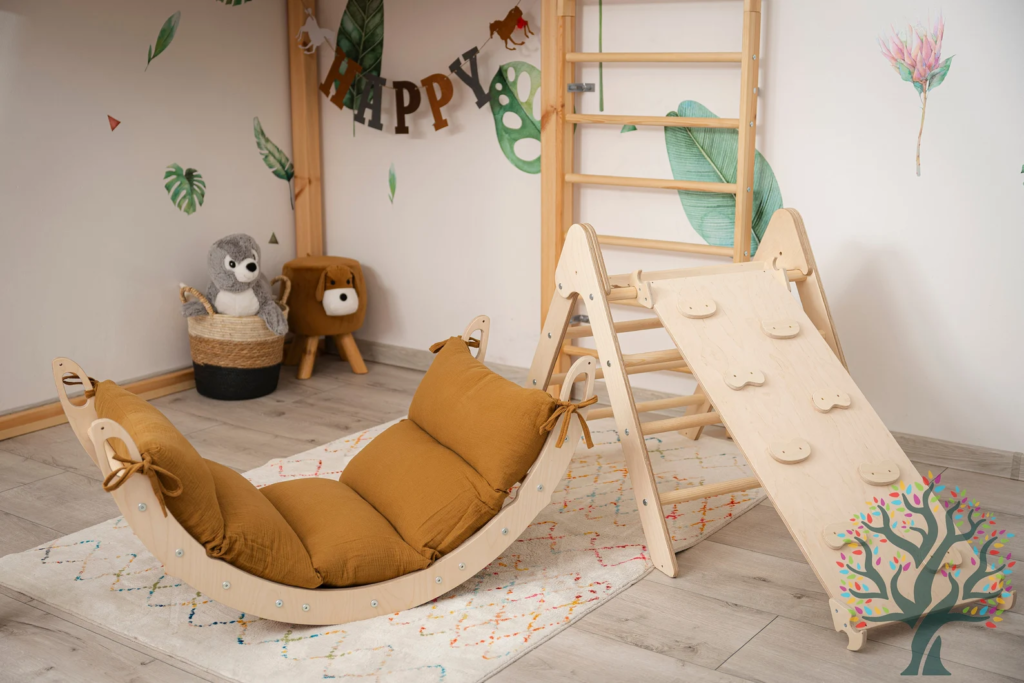
Setting up simple obstacle courses with household items is a great way to boost your toddler’s coordination and critical thinking skills, as they navigate through, over, and under various obstacles. They get to assess their environment, make quick decisions, and adjust their actions based on the obstacles they encounter. Obstacle courses also promote physical fitness, balance, and spatial awareness, as your toddler navigates the surrounding space.
For a convenient option, check out this DIY Obstacle Course Kit on Etsy, which offers everything you need to set up a fun obstacle course at home.
3. Hula hoops

Games involving jumping in and out of hula hoops are great for developing your toddler’s motor skills and spatial reasoning, as well as enhancing balance, agility, and overall physical fitness. Hula hoops can be used in a variety of creative ways beyond just jumping, though. For example, your toddler can roll the hoop or use them as targets for tossing bean bags or balls, which helps improve their aim and hand-eye coordination. You can also arrange multiple hula hoops on the ground to create a challenging path that your toddler can navigate by stepping or hopping between them.
Check out the Colourful Hula Hoops on Etsy to add a splash of colour to your child’s playtime activities.
4. Bean bag toss
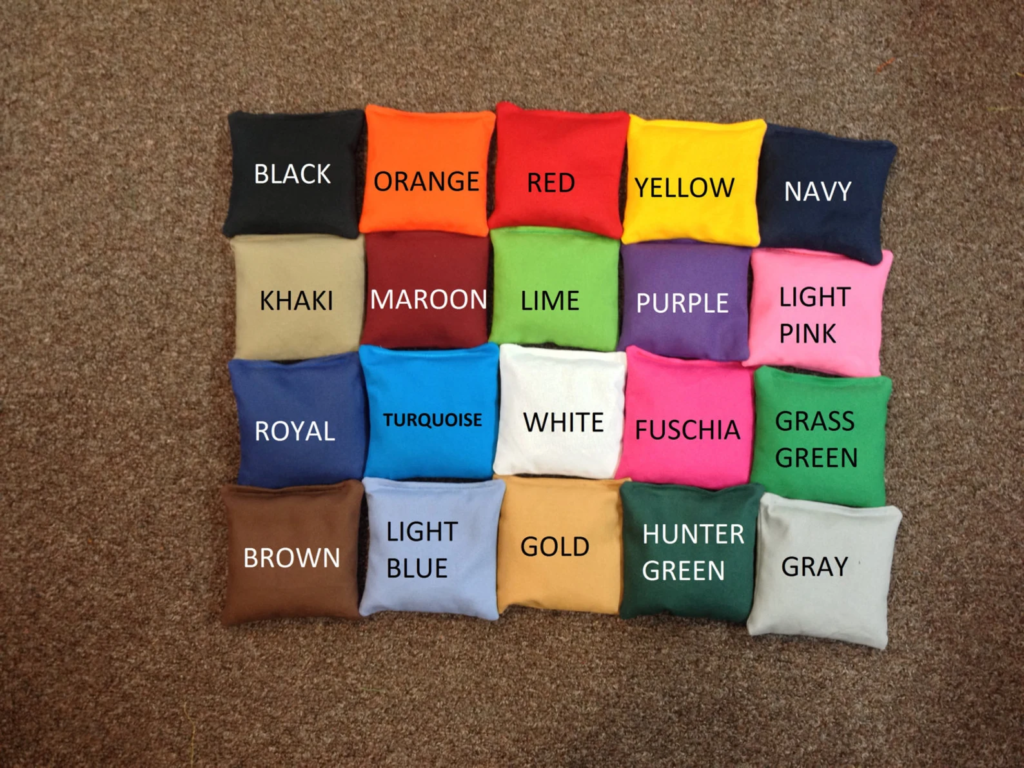
Tossing bean bags into targets is a timeless activity that promotes hand-eye coordination and problem-solving skills. By aiming and throwing bean bags at targets, your child learns to focus, judge distances, and adjust their throws to improve accuracy. This repetitive action also enhances fine motor skills and muscle memory while figuring out the best angles and force to hit the target.
Bean bag toss is also a great social activity, so encourage your toddler to play and compete with friends or family. You can also change the target distances or use different targets to keep it fresh and exciting.
Check out these Bean Bags on Etsy for an afternoon of fun!
5. Balance beams
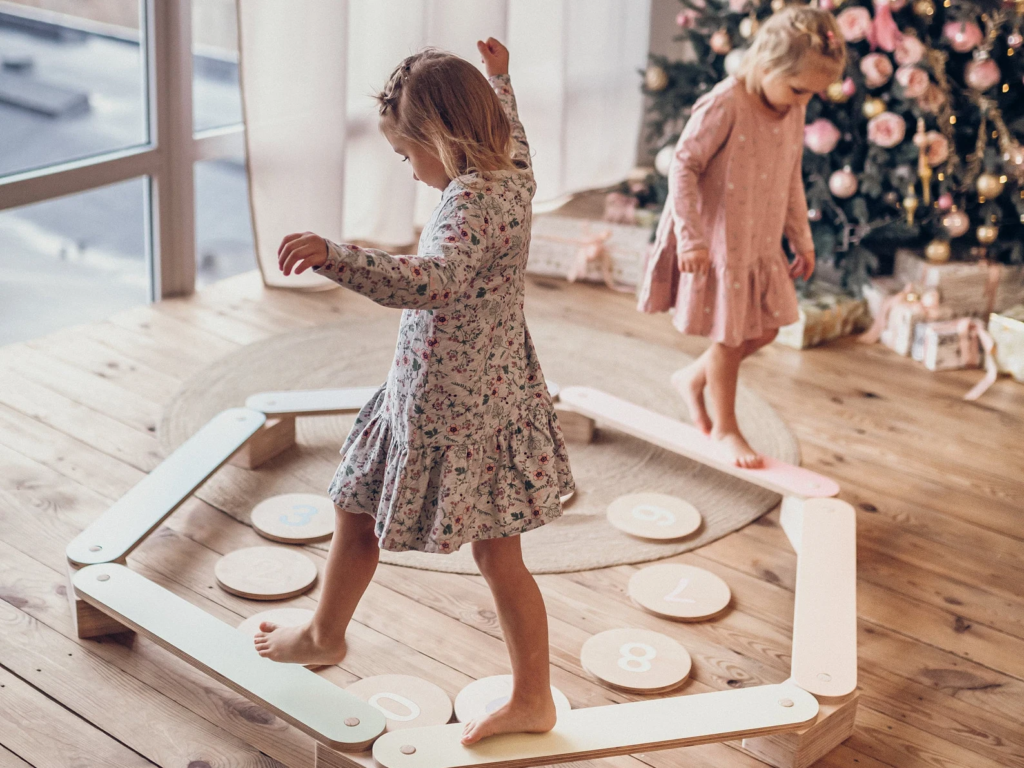
The simple yet challenging exercise of walking on a balance beam requires your child to focus on maintaining stability as they place one foot in front of the other along a narrow beam, which strengthens core muscles, improves posture, and boosts concentration.
To make it more fun, you can incorporate playful scenarios like pretending the beam is a tightrope or a log over a river. For a high-quality fun option, check out the Wooden Balance Beam on Etsy, which offers a sturdy platform for your toddler to practice their balancing skills.
Cognitive Activities
6. Puzzles
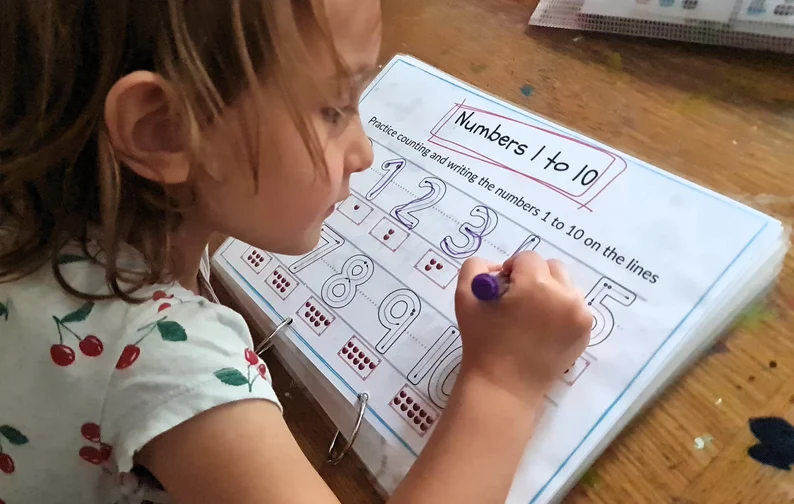
Age-appropriate puzzles are great at helping your toddler recognise shapes, colours, and patterns. Puzzles require strategic thinking as your child figures out how to fit the pieces together. As completing a puzzle often takes time, this activity also promotes patience and perseverance, as well as manipulating the small pieces improves fine motor skills and boosts hand-eye coordination. Puzzles can be enjoyed alone, promoting independent play and concentration, or as a collaborative effort, encouraging social interaction, open-ended questions and answers, and teamwork.
For an engaging and educational twist on traditional puzzles, consider our very own Maths Activity Book, Toddler Preschool Editable CANVA Template on Etsy. The customisable Maths Activity Book offers a variety of puzzle activities designed to develop early math skills in a fun and interactive way, making it an excellent addition to your toddler’s learning toolkit. You can also check out our interactive YouTube video below all about how to create the Maths Activity Book at home.
7. Sorting games
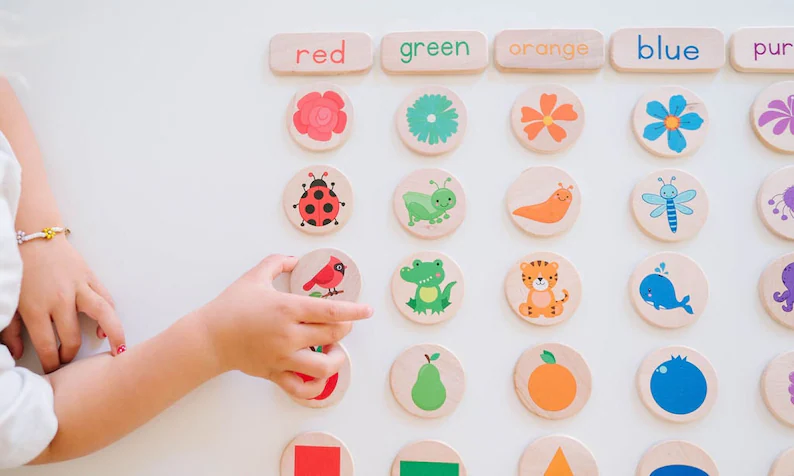
Sorting games is such a fun way to enhance cognitive skills by sorting objects based on colour, size, or shape. This play develops your toddler’s ability to categorise and organise, which is essential for early math skills, and as these games are adaptable to various difficulty levels, they can be enjoyed individually or in groups, promoting both independent play and social interaction.
For an engaging sorting experience, check out this Colour Sorting Game on Etsy. It features vibrant, engaging pieces which your child can sort by colour, animal, flower, insect, shape, fruit and vehicle, making it an all-round problem-solving game!
8. Memory games
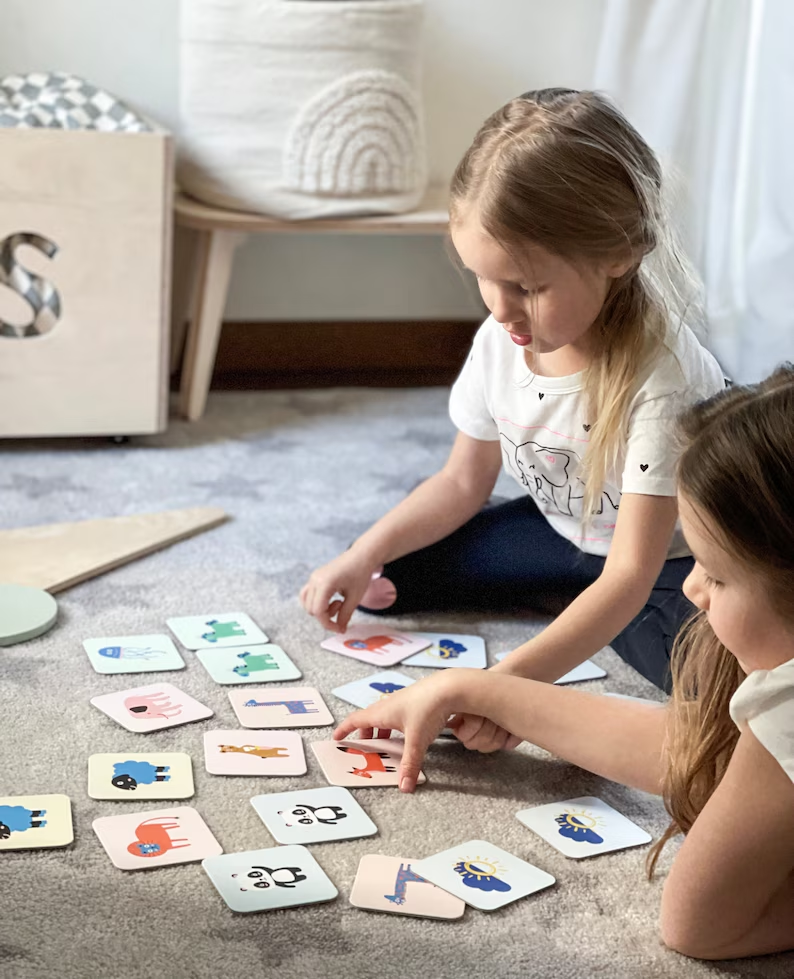
Memory games like matching pairs, are an excellent way to boost your toddler’s memory. These games involve flipping cards to find matches and helping your child remember locations and details, which sharpens their recall.
These versatile games can be played alone or with others, promoting both independent play and social skills like turn-taking, sharing, and communication. Adaptable to various themes and difficulty levels, memory games grow with your child as their skills advance.
For a staple option, check out this Memory Card Game* on Etsy. It features beautifully designed cards that provide a valuable learning experience, making it a fantastic addition to any child’s toy collection.
Also check out our video below on how to make your very own Memory Card Game at home!
9. Counting activities

Counting activities are key to building early math skills, so introduce counting with familiar objects like toys, snacks, or household items. For example, counting blocks, beads, or pieces of fruit can turn a simple task into an engaging learning experience, which can help your toddler recognise numbers, understand one-to-one correspondence, and grasp the concept of quantities.
Counting also develops fine motor skills as your toddler handles small objects, which requires focus and accuracy. These foundational skills set the stage for more complex math concepts later on.
For an educational tool, check out the Counting Bears activity on Etsy. These colourful bears are perfect for counting, sorting by colour or size, and learning basic arithmetic. They’re designed to be visually appealing and easy for little hands to handle.
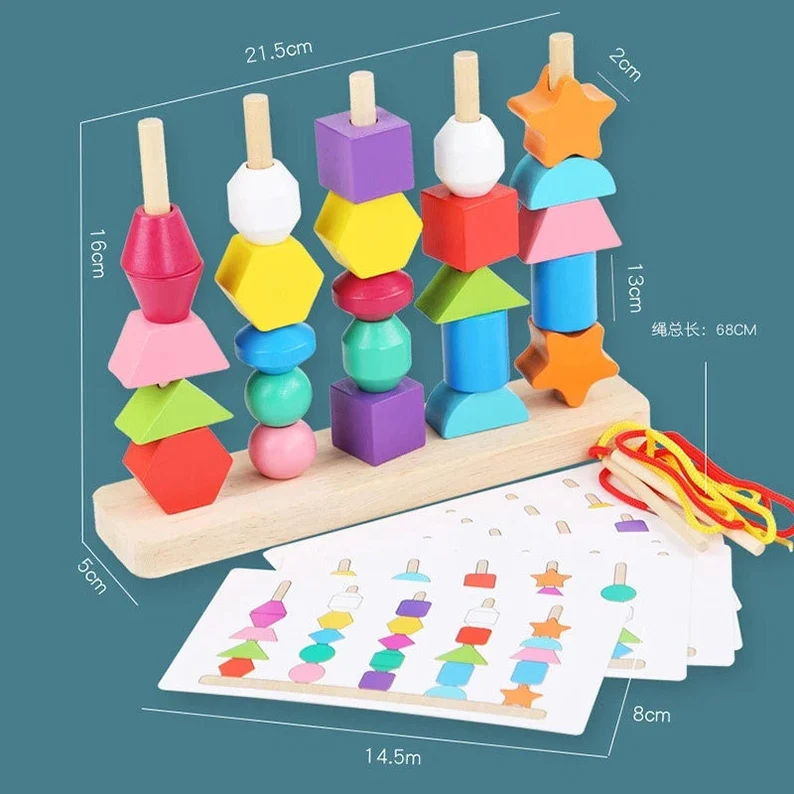
10. Shape matching
Shape matching to corresponding slots can help your toddler develop visual recognition and fine motor coordination. Identifying and categorising geometric forms enhances cognitive development and lays the groundwork for advanced spatial awareness and problem-solving skills.
For a high-quality option, consider this Shape Matching Activity on Etsy.
11. Pattern recognition
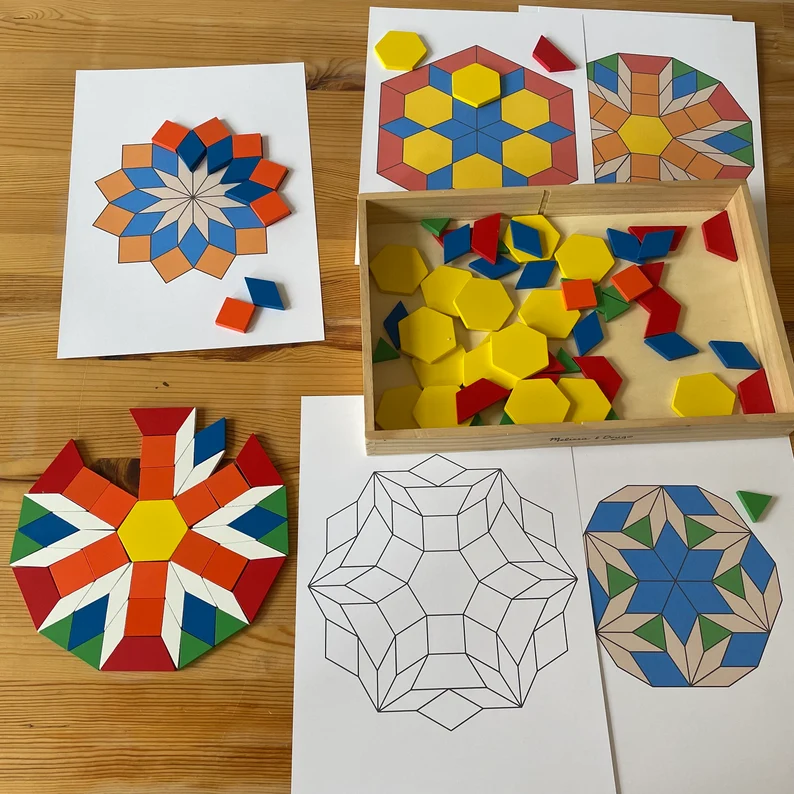
Pattern recognition involves completing sequences or patterns using different objects, which is essential for developing logical thinking and foundational mathematical skills. By engaging in pattern recognition, younger children learn to observe, identify, and predict sequences, which are crucial for problem-solving and understanding more complex mathematical concepts.
Pattern recognition helps your toddler develop a sense of order and predictability, which is important for cognitive development. It enhances their ability to make connections between different elements and understand the concept of sequences and regularities in their environment. These skills are not only fundamental for math but also for reading, as recognising patterns in letters and words is a key aspect of literacy.
For an engaging tool, consider the Pattern Block Activity on Etsy. These blocks come in various shapes and colours, allowing your toddler to create and complete patterns.
12. Treasure hunts
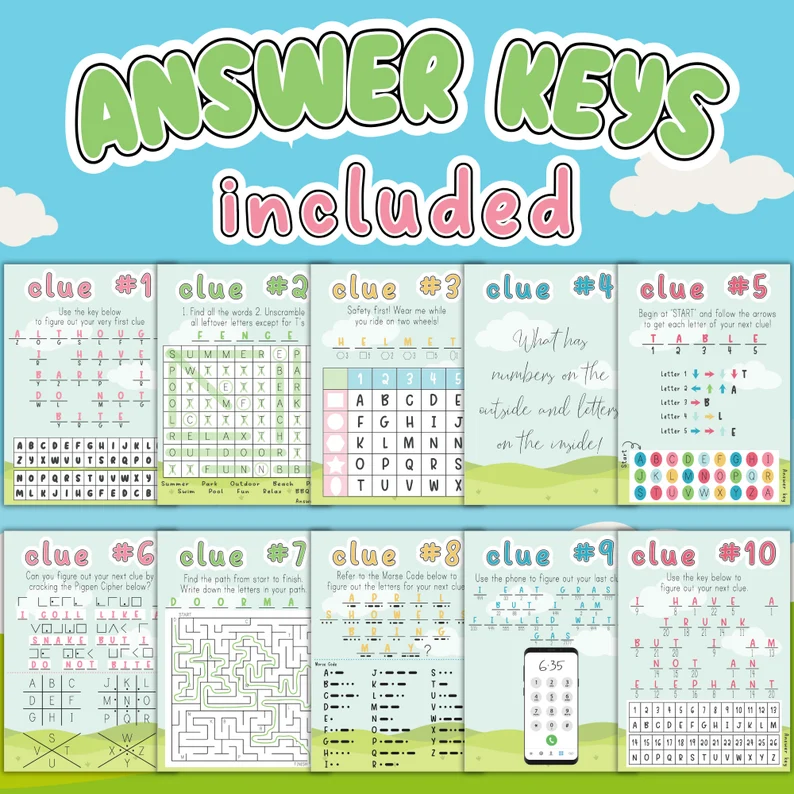
Treasure hunts are great at enhancing your toddler’s problem-solving and critical-thinking skills. By finding hidden objects based on clues, your toddler learns to follow instructions and use reasoning to deduce the locations of their treasures. This activity not only keeps your child entertained but also promotes a range of cognitive and social skills.
In a typical treasure hunt, your child is given clues that lead them from one location to another, with each clue bringing them closer to the final treasure. These clues might involve simple riddles, visual hints, or descriptive directions that your toddler must interpret. As they work through the clues, your child practices critical thinking by analysing information, making connections, and drawing conclusions.
For a creative approach to organising a treasure hunt, consider these Treasure Hunt Clue Cards on Etsy, which provide ready-made clues that you can hide around your home or yard, saving you time.
13. Role-playing

Role-playing is a powerful activity for toddlers that involves engaging in pretend play with others to develop social and problem-solving skills. By immersing themselves in different roles and scenarios, your toddler can explore a variety of situations, which significantly contribute to cognitive and emotional development.
For an enriching role-playing experience, consider the Pretend Play Costumes on Etsy. These costumes provide your toddler with the opportunity to dress up and fully immerse themselves in their chosen roles, enhancing the enjoyment of their pretend play.
14. Group storytelling
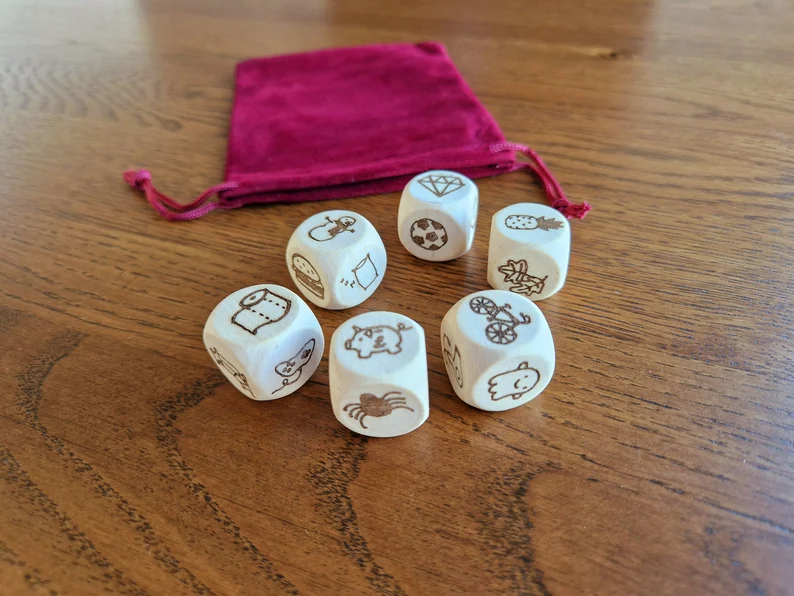
Group storytelling is an imaginative activity that involves creating stories together, boosting your toddler’s imagination and teamwork skills. This activity not only encourages creativity but also teaches your toddler to express themselves and listen to others, which promotes language development and social interaction.
For an engaging way to facilitate group storytelling, consider using Storytelling Dice from Etsy. These dice feature various images and prompts that can spark ideas and guide the storytelling process.
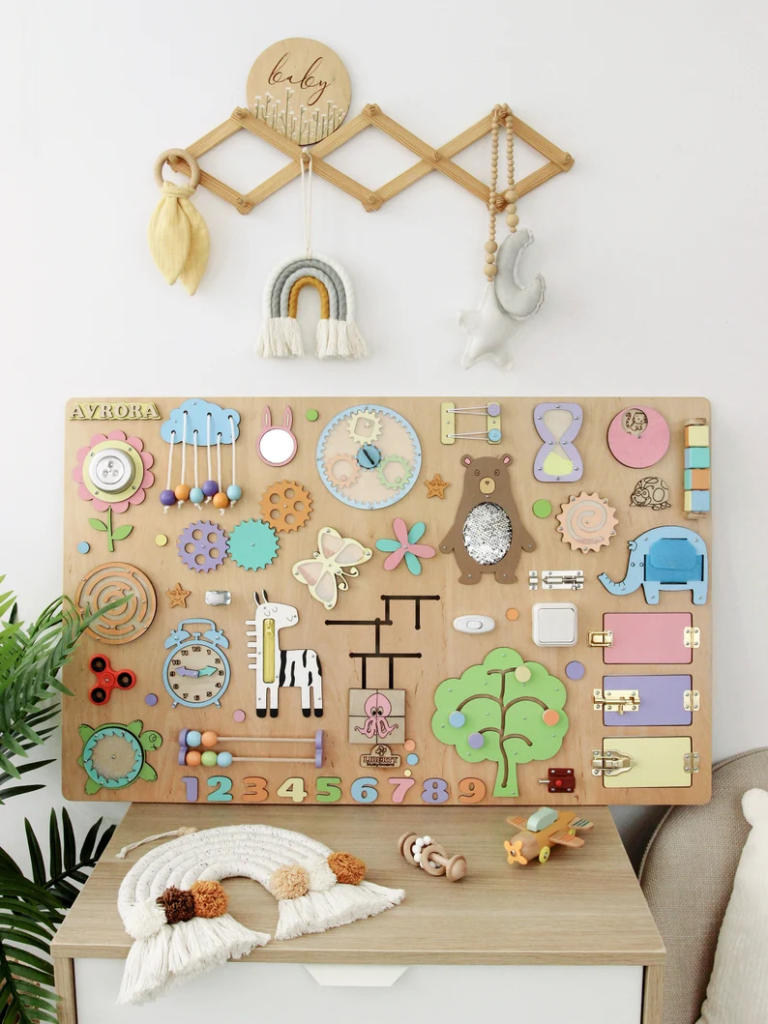
15. Interactive games
Interactive games are a wonderful way to engage your toddler in activities that require cooperation and teamwork. These games foster social interaction, turn-taking, and group problem-solving, making them an essential part of early childhood development.
For a high-quality and engaging option, consider the Interactive Board Games available on Etsy. These board games are designed to be fun and educational, providing a perfect platform for your toddler to develop their social and cognitive skills through play.
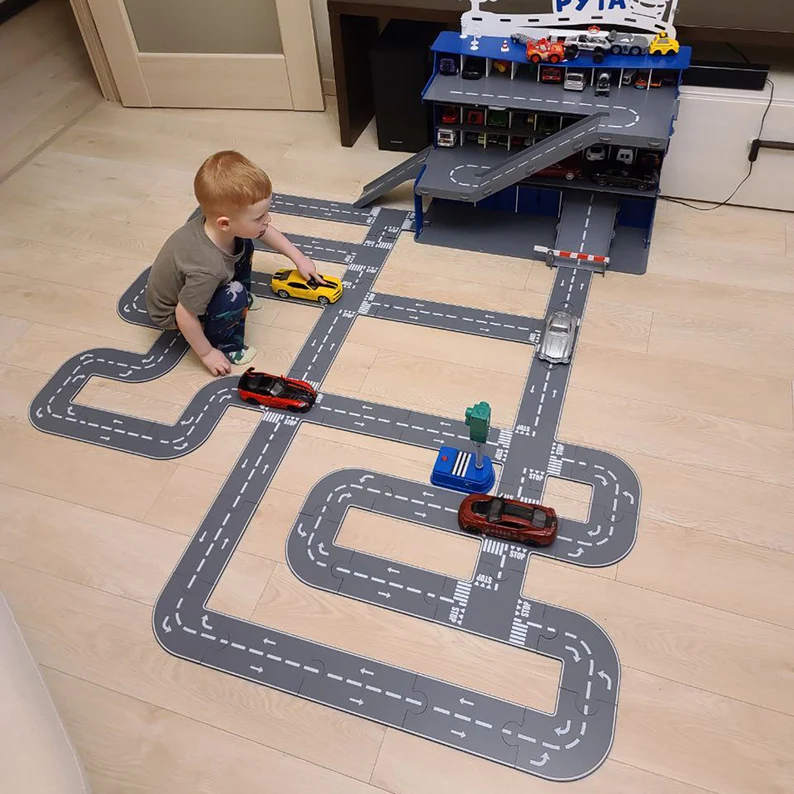
16. Puzzle races
Puzzle races are an exhilarating activity where your toddler can solve puzzles together in a race format to develop teamwork and quick thinking. This activity transforms traditional puzzle-solving into a dynamic group event that encourages friendly competition while promoting essential cognitive and social skills.
For an engaging puzzle race experience, consider the Puzzle Race Game available on Etsy. This product provides all the materials needed for an exciting puzzle race.
17. Cooking together
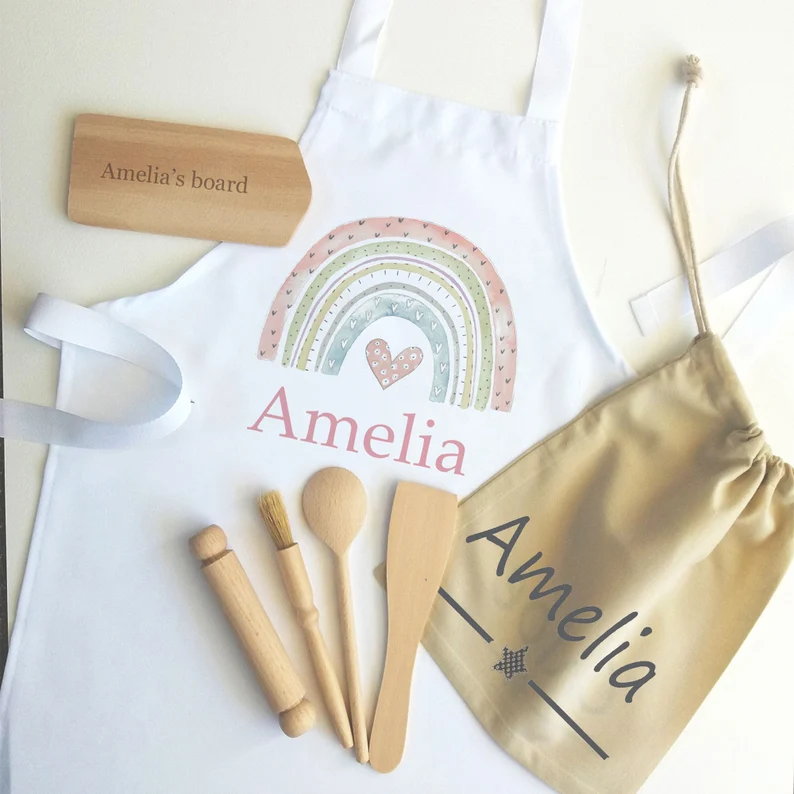
Cooking together with your toddler encourages cooperation and problem-solving skills while teaching them valuable life lessons and even security. Simple cooking activities engage your child in following instructions, measuring ingredients, and understanding the importance of teamwork, all within the enjoyable context of creating something delicious.
For a delightful cooking experience, consider the Kids Cooking Set available on Etsy. This set includes child-friendly cooking tools designed to be safe for little hands to use.
Creative activities
18. Art projects
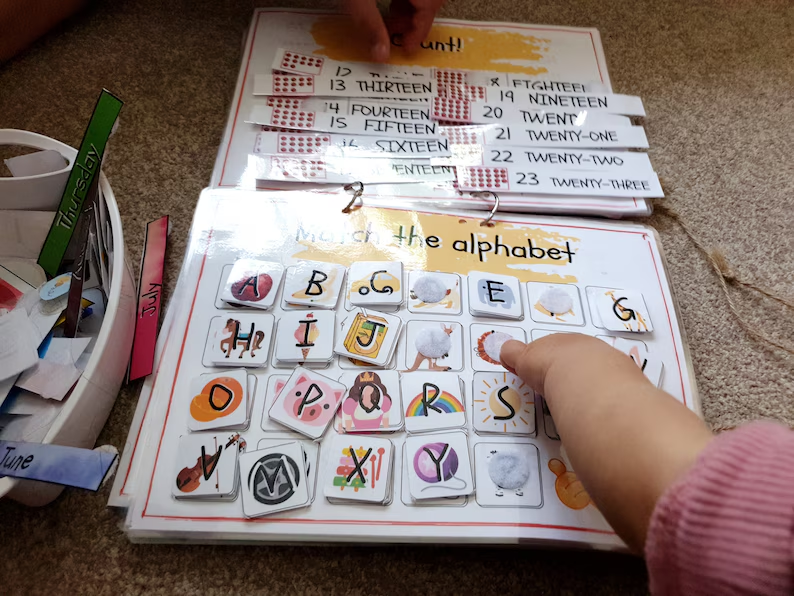
Simple art projects like drawing or painting are wonderful for encouraging your toddler’s creativity and fine motor skills. These activities allow your child to explore their imagination and express themselves through colours, shapes, and designs. Art also develops hand-eye coordination and dexterity, which are essential for tasks such as writing and using utensils. The process of creating art can also be a calming process and offers emotional benefits for your toddler.
For a versatile resource, consider our Toddler Preschool Editable CANVA Template Toddler Busy Book available on Etsy. This Toddler Busy Book provides a variety of customisable worksheets designed to inspire creativity and support learning. Also check out our video below on how to make the Toddler Busy Book at home!
19. Music and movement
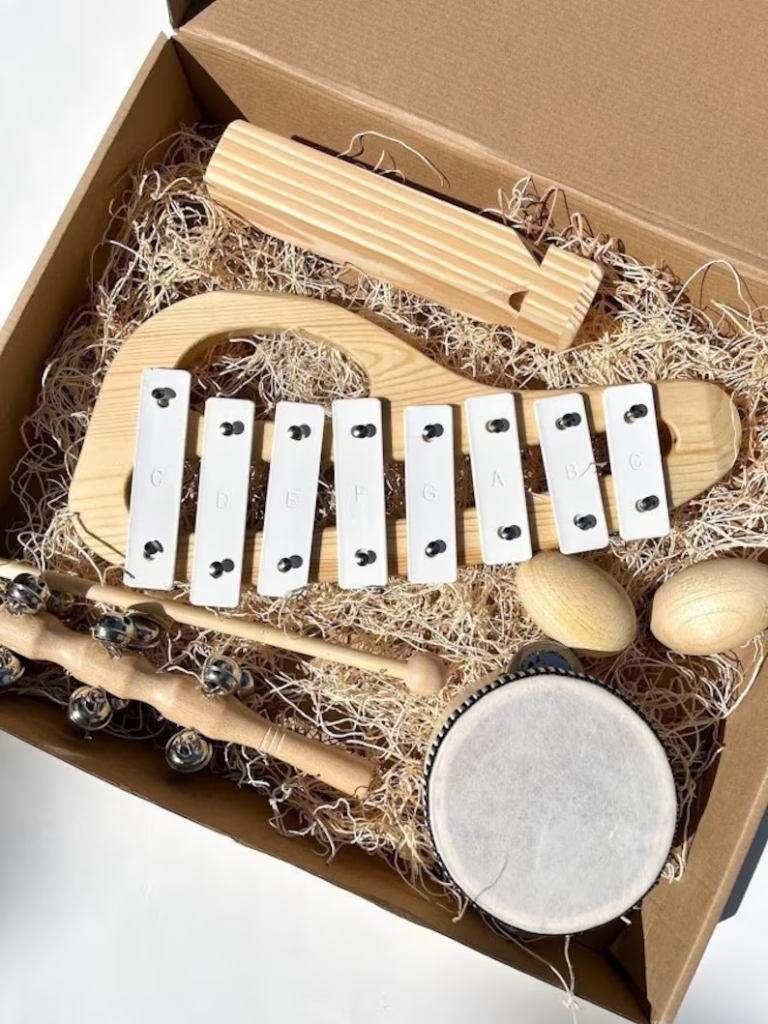
Dancing to music or playing simple instruments is a fantastic way to engage your toddler in music and movement activities, which promotes rhythm, coordination, and creativity. These activities provide a dynamic way for your child to explore sounds and express themselves physically. Dancing helps improve balance and motor skills as your toddler learns to move in time with the beat while playing instruments like tambourines, maracas, or xylophones enhances their hand-eye coordination and fine motor skills.
For an engaging experience, consider the Kids Musical Instruments Set available on Etsy, which offers a variety of child-friendly instruments designed to inspire a love of music and movement in young children.
20. Building with everyday items
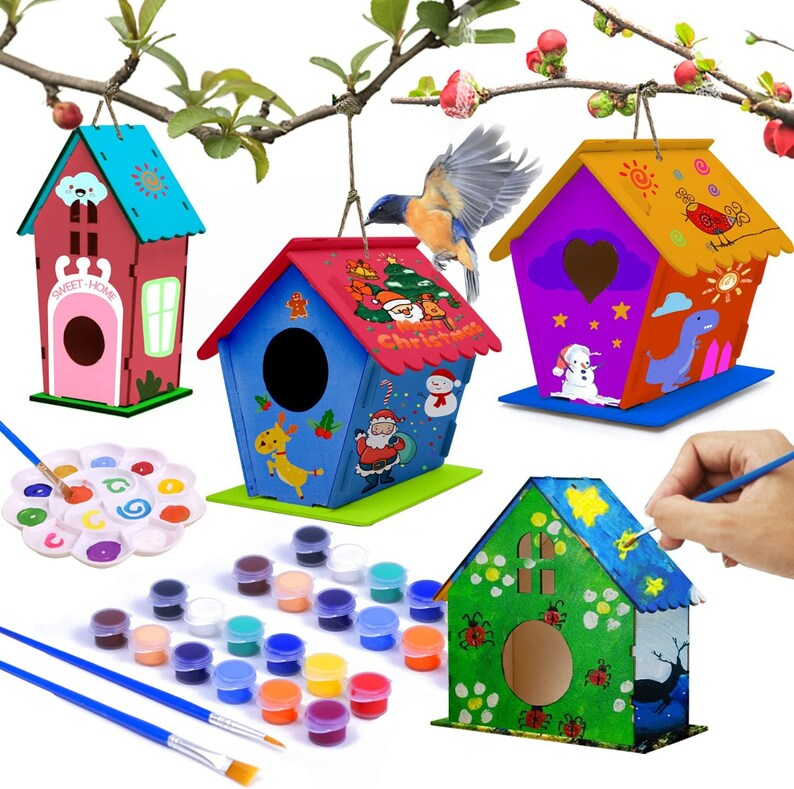
Building with everyday items, such as paper cups, cardboard boxes (you can even use old subscription boxes), and other common household objects, is a wonderful way to stimulate your toddler’s creative thinking and problem-solving skills. This activity transforms ordinary items into tools for imaginative play, allowing your child to explore their creativity and construct various structures.
For a more structured yet equally creative experience, consider the DIY Birdhouse Building Kit available on Etsy, which provides a curated selection of building materials designed to inspire young builders to build a birdhouse and enhance their developmental skills through hands-on play.
21. Craft stick creations
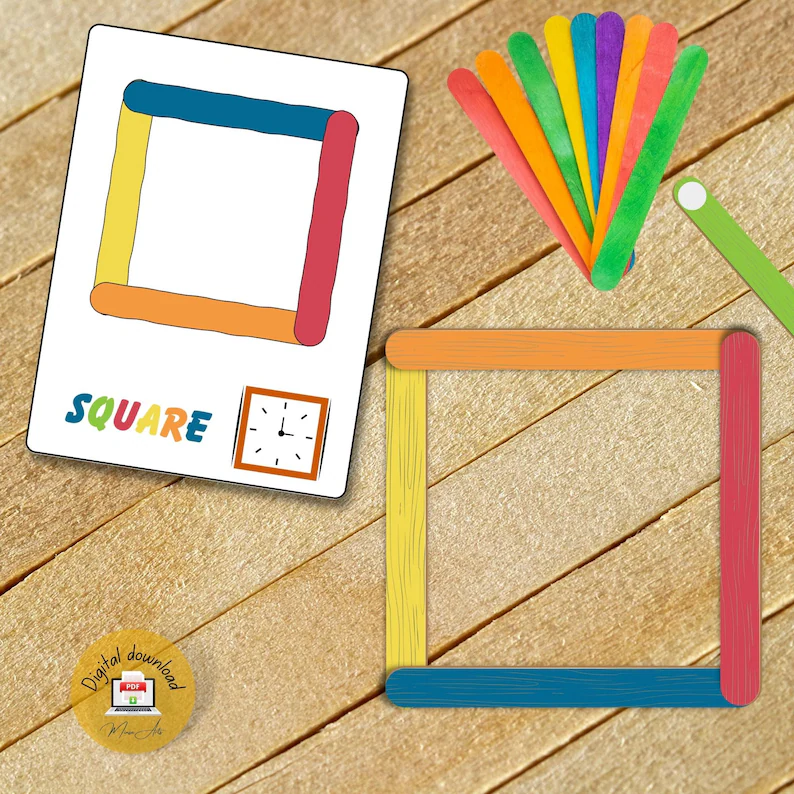
Creating shapes and structures using craft sticks is a creative activity that develops your toddler’s fine motor skills. By manipulating these simple yet versatile sticks, your child can build anything from basic shapes to intricate designs, allowing their imaginations to run wild.
For an engaging crafting experience, consider the Craft Stick Kit available on Etsy, which offers a variety of colourful popsicle sticks to help your toddler create shapes.
22. Playdough sculpting
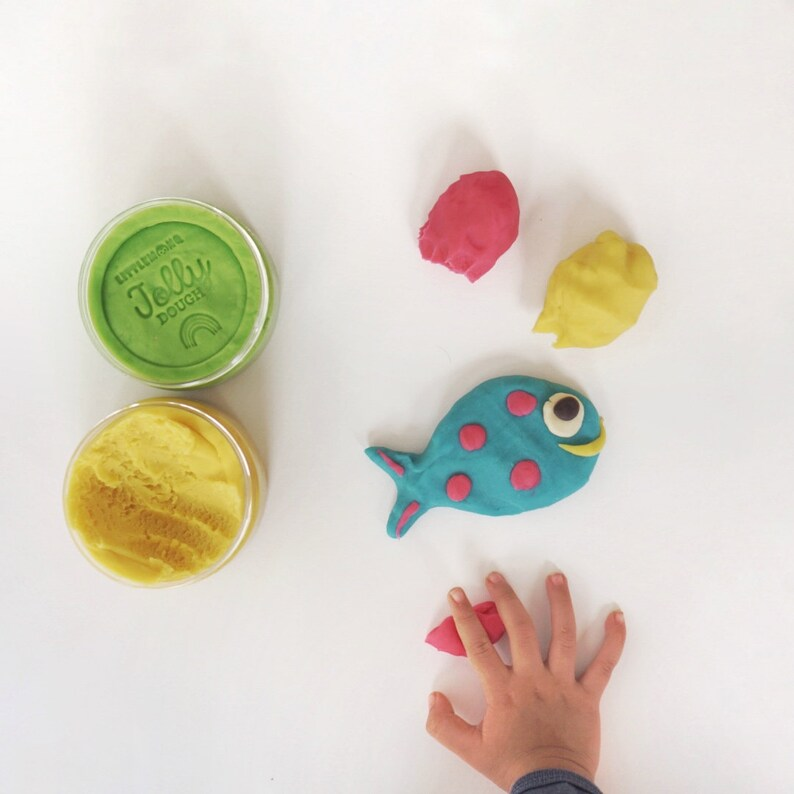
Playdough sculpting is a fantastic activity for toddlers that involves making shapes to enhance fine motor skills. By squishing, rolling, and moulding Playdough, your child develops hand strength and dexterity, which are essential for tasks like writing and using tools.
For a high-quality and eco-friendly option, consider the Natural Playdough Set available on Etsy, which offers safe, non-toxic homemade Playdough in a variety of vibrant colours, perfect for inspiring endless hours of imaginative sculpting and sensory exploration.
23. Nature art
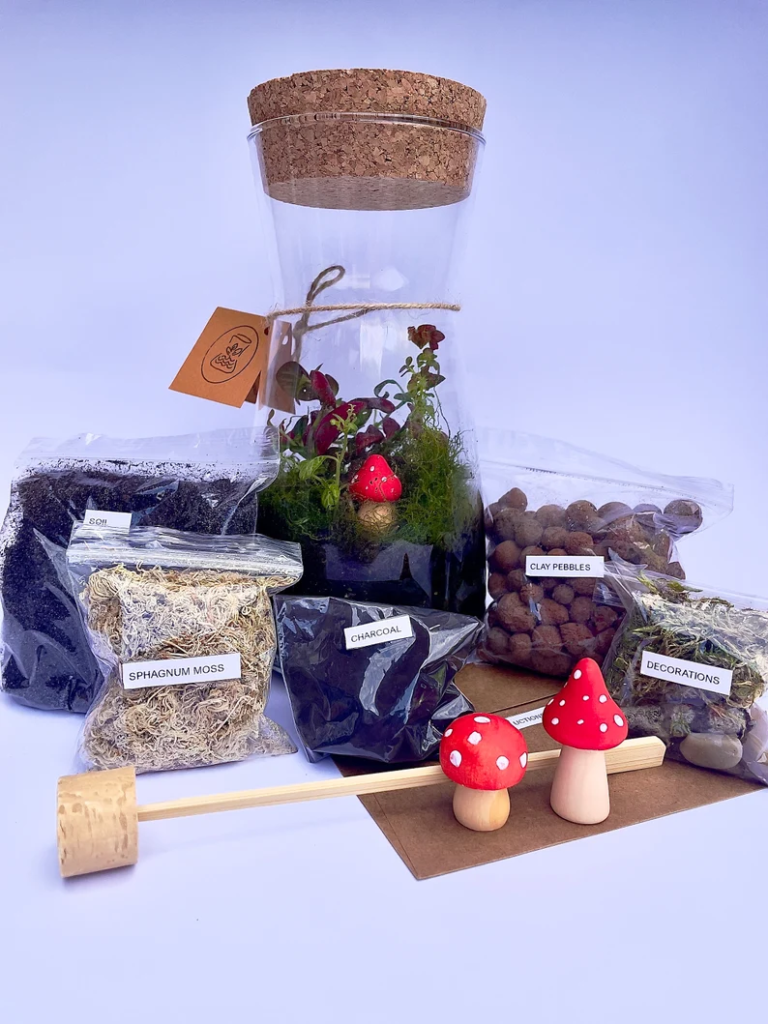
Nature art involves using natural materials such as leaves, stones, flowers, and twigs for creative projects, which promotes creativity and a connection to the environment. This activity encourages your toddler to explore the outdoors and collect various natural items, which they can then use to create unique and beautiful artwork.
For an inspiring option, consider the DIY Terrarium Kit available on Etsy, which provides a curated selection of natural materials to help your toddler create stunning nature-based art projects while learning about the beauty of the natural environment.
24. Stringing beads
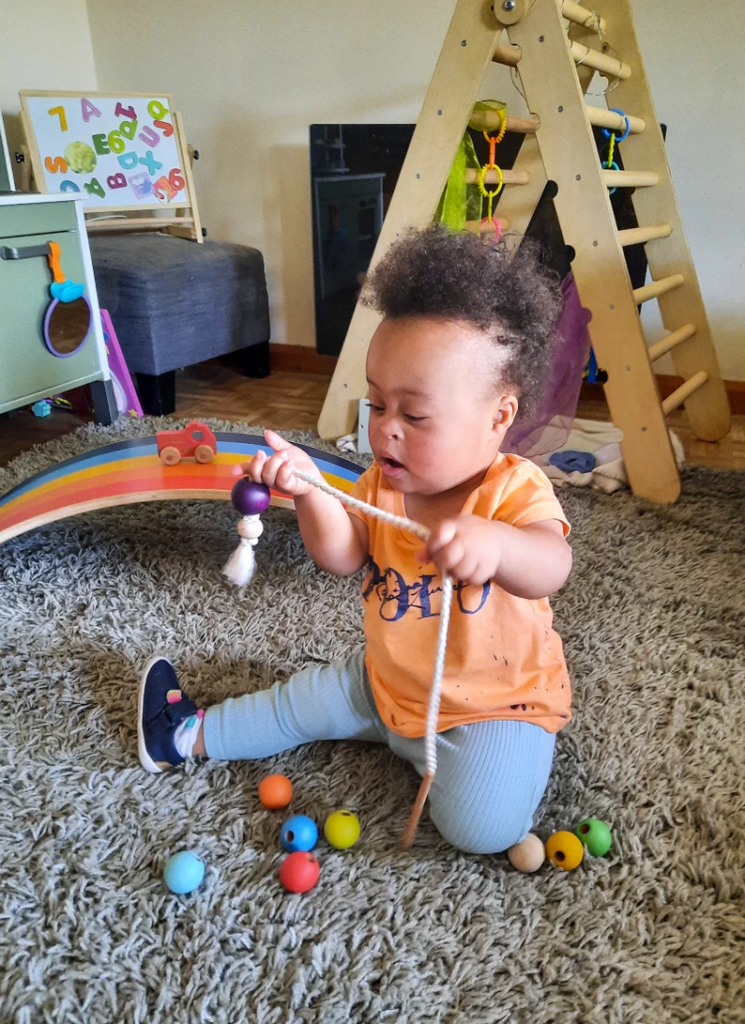
Stringing beads is an educational activity that significantly improves your toddler’s fine motor skills. As your child threads beads onto a string, they refine their hand-eye coordination and develop greater dexterity.
For a developmental tool, consider the Bead Stringing Set available on Etsy, which offers a variety of colourful beads and strings designed to engage your child and support their fine motor development through creative play.
25. Button sorting
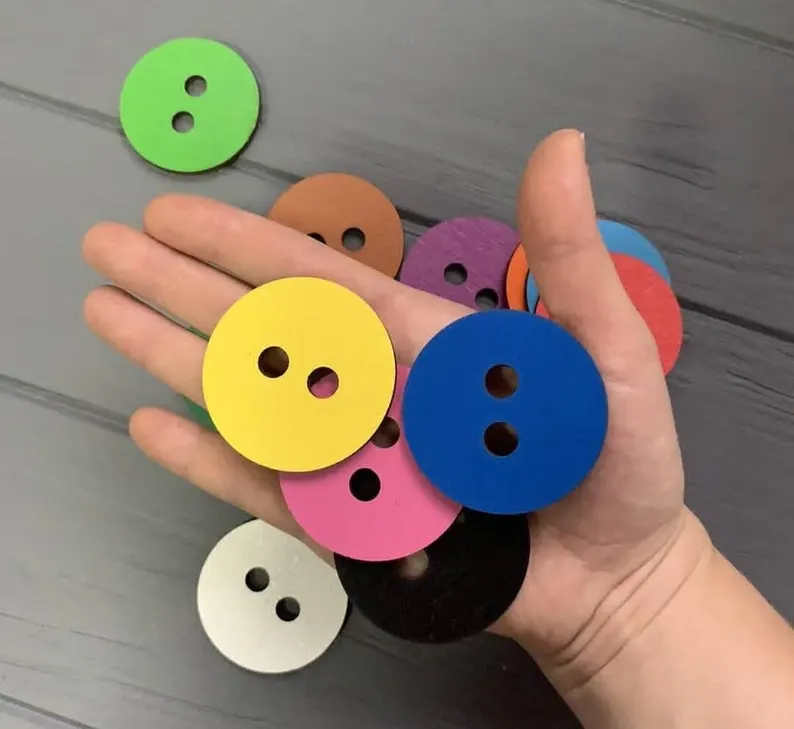
Button sorting is a simple yet highly effective activity for developing your toddler’s fine motor skills and enhancing their ability to categorise and sort objects. By sorting buttons by colour, size, or shape, your toddler engages in a task that requires precision and careful manipulation, which helps refine their hand-eye coordination and dexterity.
For a convenient tool, consider the Button Sorting Kit available on Etsy, which provides a variety of colourful buttons and designed to make this activity engaging and beneficial for young children.
26. Lacing cards
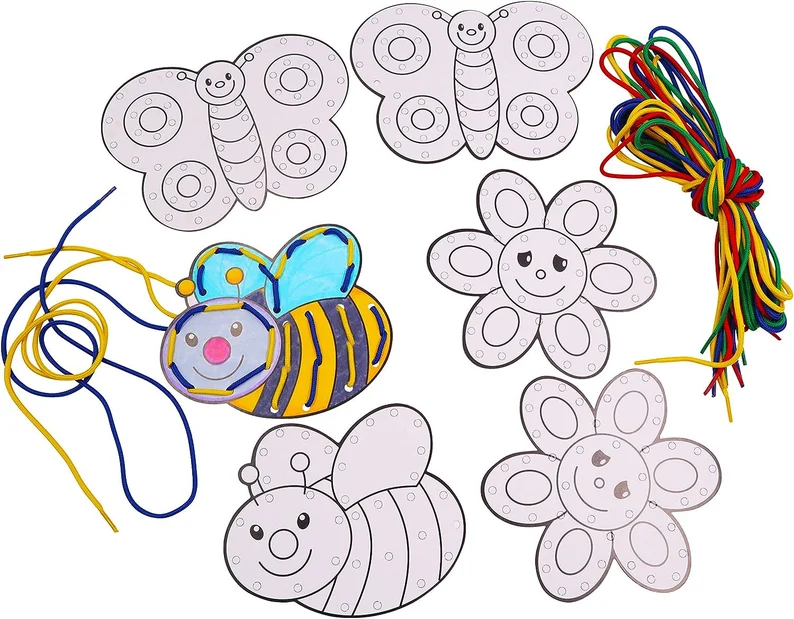
Using lacing cards is an excellent activity for enhancing your toddler’s hand-eye coordination and fine motor control. These cards feature various shapes and designs with pre-punched holes that children thread with lace or string. This repetitive motion of threading the lace through the holes helps your toddler develop precision and dexterity, as they must align the lace with each hole and pull it through carefully. Lacing activities also promote patience and concentration, as your toddler need to focus on completing the task without rushing.
For a high-quality option, consider the Lacing Cards available on Etsy, which come in various engaging designs that make learning through play enjoyable for young children.
27. Cutting practice
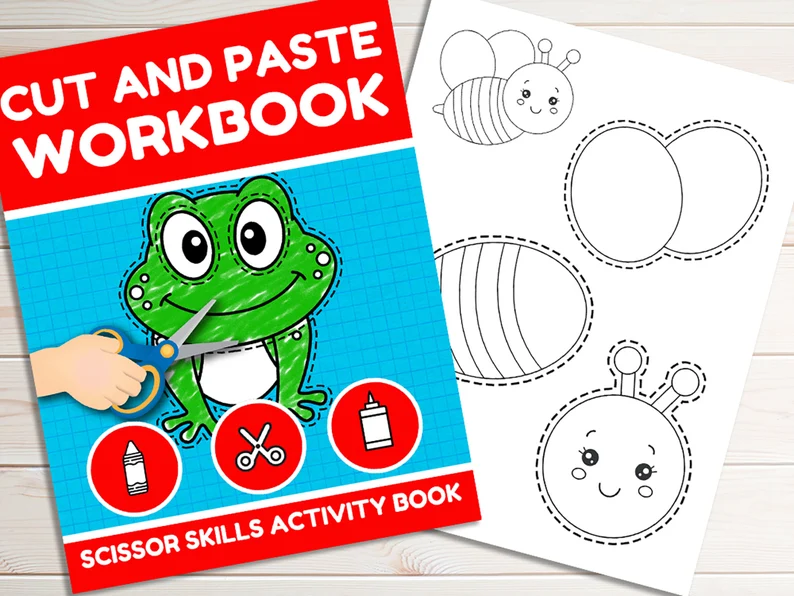
Safe cutting activities are invaluable for improving your toddler’s scissor skills. Using kid-friendly scissors to cut shapes from paper, your child can practice the motion, which strengthens small muscles in their hands and fingers, essential for fine motor control
For a comprehensive resource, consider the Kids Scissors and Cutting Activity Book available on Etsy, which includes a variety of cutting exercises designed to make learning these skills enjoyable for young children.
28. Sticker activities
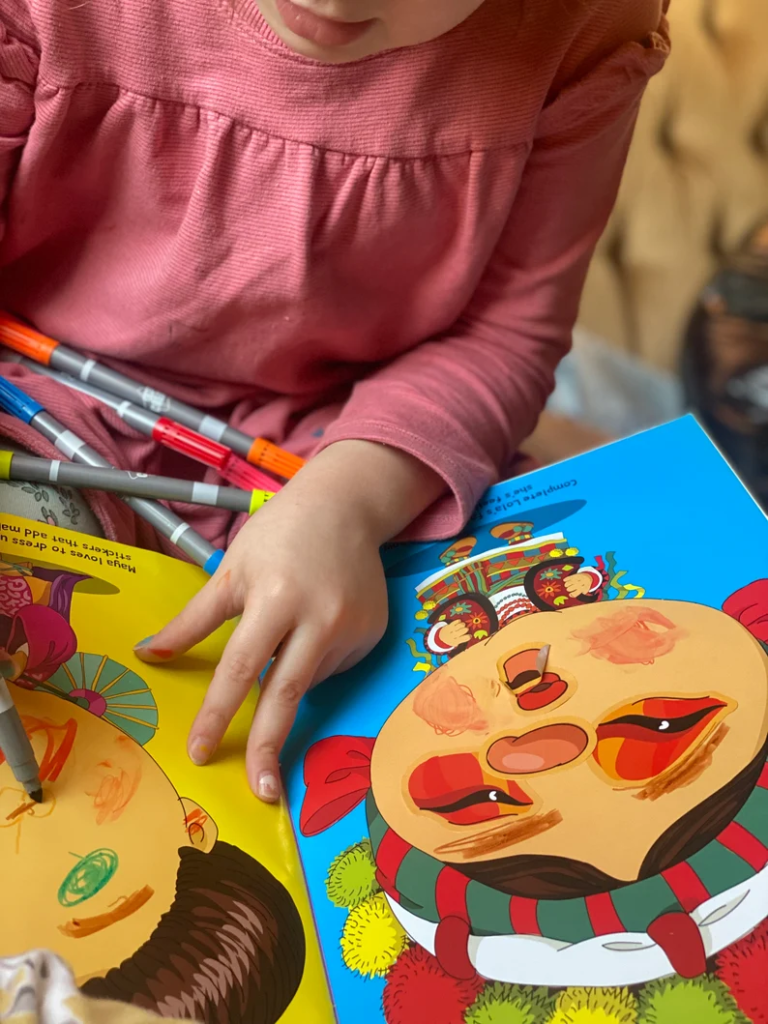
Sticker activities are a delightful way for your toddler to develop precision and fine motor skills. By peeling and placing stickers, your child can enhance their dexterity and hand-eye coordination. Sticker activities can also introduce concepts such as shapes, colours, and patterns.
For an interactive experience, consider the Sticker Activity Book available on Etsy. This book offers a variety of themed stickers and activities designed to captivate your toddler’s interest while promoting their fine motor development and creativity.
Sensory activities
29. Sensory bins
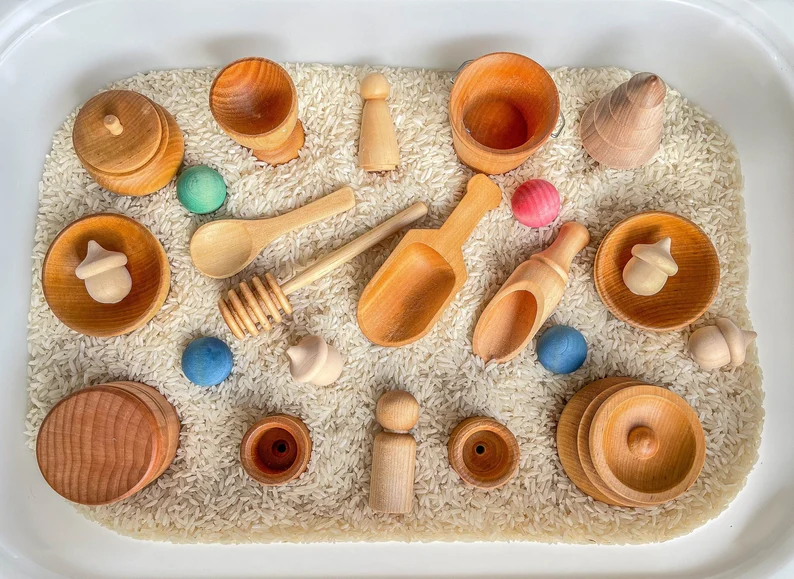
Sensory bins are an excellent tool for toddlers to explore different textures and materials. These bins can be filled with a variety of items, such as rice, beans, sand, water beads, or even small toys, offering endless opportunities for sensory exploration. As your toddler sifts through the contents, they enhance their fine motor skills by scooping, pouring, and manipulating the materials. They also provide a calming effect, helping your child to focus and relax.
For a convenient and ready-to-use option, consider the Sensory Bin Kit* available on Etsy. This kit includes a variety of sensory tools designed to captivate your toddler’s curiosity and support their sensory and cognitive development through hands-on play.
30. Water play
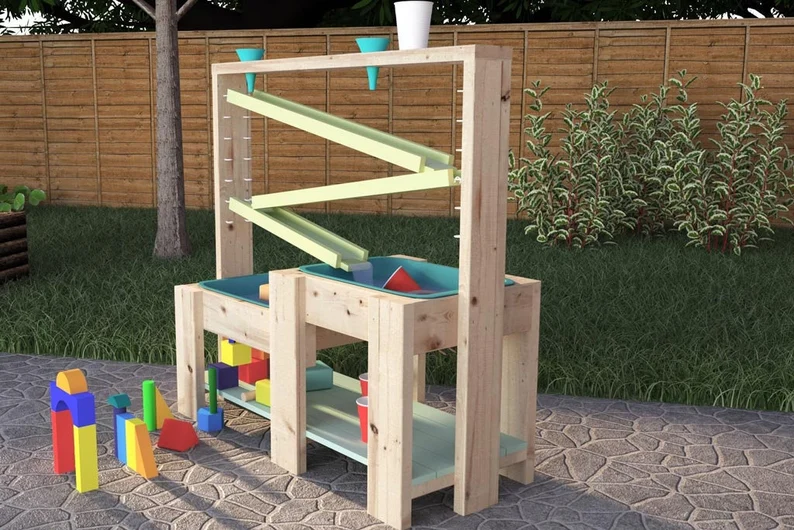
Water play is an engaging activity that allows your toddler to explore different physical properties and improve their coordination. Playing with water can involve pouring, splashing, scooping, and observing how water behaves in various conditions. This type of play helps children understand concepts such as volume, buoyancy, and flow.
Additionally, water play is soothing and can have a calming effect on your toddler. The sensory experience of feeling water and watching its movement can help reduce stress and promote relaxation. So, it’s an ideal activity for both solo play and social interaction.
For an enjoyable water play experience, consider the Water and Sand Play Set on Etsy. This set includes various accessories designed to make water play fun, providing your toddler with everything they need to explore through this delightful activity.
31. Sand play

Sand play is a wonderfully tactile and creative activity which promotes exploration of textures and builds fine motor skills. By manipulating sand, whether through scooping, pouring, moulding, or sifting, your child can engage in sensory exploration that enhances their understanding of different materials and their properties. The varied textures of sand—whether dry and gritty or wet and mouldable—provide a rich sensory experience that stimulates your toddler’s sense of touch and encourages curiosity.
Additionally, sand play can be a social activity, as children work together to build structures or share tools. This collaborative aspect helps your toddler develop social skills, such as sharing, negotiating, and taking turns.
For an engaging sand play experience, consider the Coloured Sand Play Kit available on Etsy. This kit includes a variety of tools designed to enhance sand play.
32. Kinetic sand
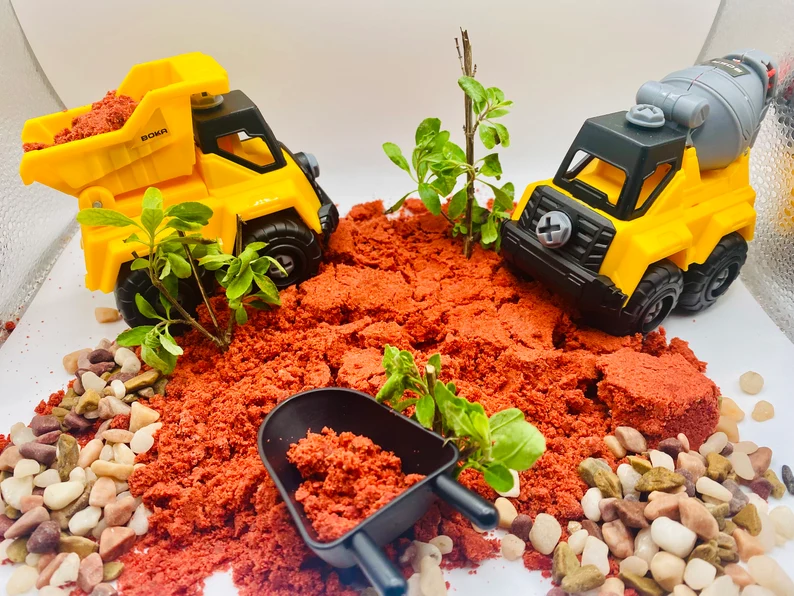
Kinetic sand is a fantastic medium for creative play. Unlike regular sand, kinetic sand is mouldable and sticks to itself, making it easy for your child to sculpt without the mess. This special property offers the chance to create intricate designs, build structures, and experiment with various forms, which greatly enhances fine motor skills and hand-eye coordination.
The tactile sensation of kinetic sand provides a soothing sensory experience. As your toddler squeezes, stretches, and manipulates the sand, they receive sensory feedback that can be both calming and stimulating, making it an excellent tool for sensory exploration. This sensory play supports cognitive development by helping your child learn about texture, consistency, and the physical properties of materials.
For a high-quality kinetic sand experience, consider the homemade Kinetic Sand Set available on Etsy. This set includes everything needed to inspire imaginative play and tactile exploration, offering your toddler a fun way to develop their motor skills.
33. Sensory bottles
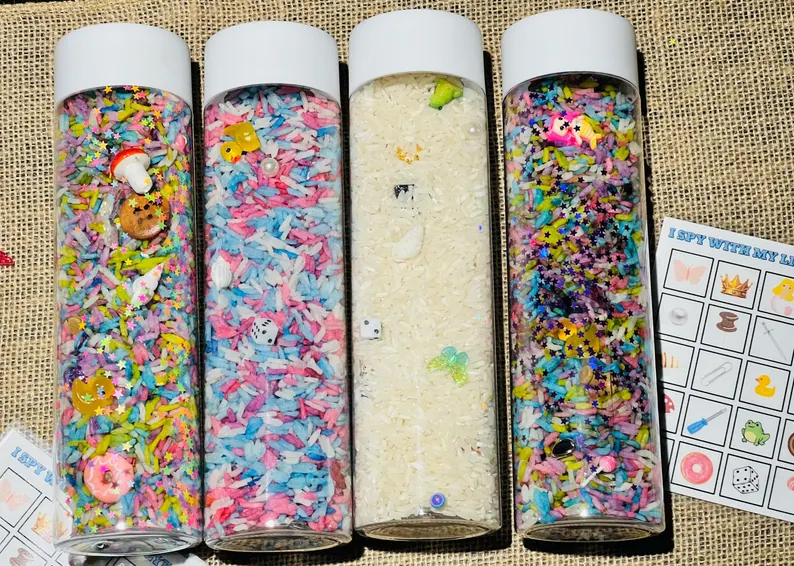
Sensory bottles are captivating tools for toddlers, filled with various materials that provide a rich sensory experience when shaken and observed. These bottles can contain items like glitter, beads, water, oil, or small toys, creating a mesmerising display of colours, movements, and sounds that engage your child’s visual and auditory senses.
When your toddler shakes and manipulates sensory bottles, they stimulate their curiosity, watching the materials swirl, settle, and interact within the bottle, which helps them understand concepts like density, buoyancy, and cause and effect. The movement and flow inside the bottles can be both fascinating and soothing, providing a calming effect that can help reduce anxiety and improve focus.
For a delightful sensory experience, consider the Sensory Bottles available on Etsy. These bottles are designed to provide a safe and stimulating sensory activity for toddlers, encouraging exploration and learning through play. Whether used for calming sensory breaks or as part of a structured learning activity, sensory bottles are a versatile addition to any child’s developmental toolkit.
Logical reasoning activities
34. Logical puzzles
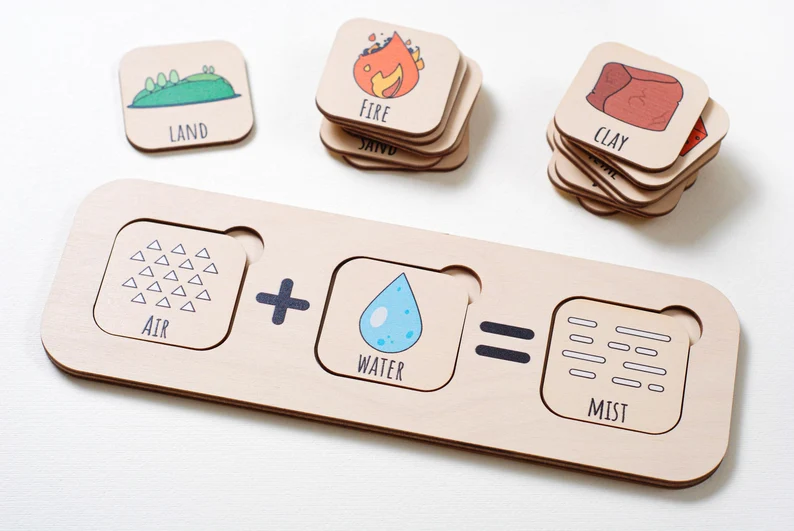
Logical puzzles are an excellent way to challenge toddlers and enhance their cognitive development. These puzzles involve matching, sequencing, or arranging pieces based on specific rules or patterns, which encourages your child to think critically and make connections.
As your toddler works on logical puzzles, they develop important problem-solving skills, analysing the puzzle, identifying patterns or sequences, and determining the steps needed to reach a solution. This process helps them understand cause and effect, improving their memory, and enhancing their ability to concentrate.
For an educational option, consider the Logical Puzzle Set on Etsy. This set offers a variety of puzzles designed to engage young minds and promote logical reasoning.
Create a routine
Just like riding a bike, creating a consistent routine for problem-solving activities will help your toddler know what to expect, so they’re more likely to engage regularly. Try incorporating the above activities into your daily schedule to build a stable learning environment that supports cognitive development.
Encourage independence
Encourage your toddler to solve problems on their own, so they can build independence. While it’s great to offer guidance, it’s best to let them take the lead in figuring out solutions. This boosts their confidence and helps them develop critical thinking skills as they learn to tackle challenges independently.
Using everyday opportunities
Incorporate problem-solving into everyday activities. Simple tasks like sorting laundry, setting the table, or organising toys can become valuable learning experiences, so use these opportunities to encourage your toddler to think critically and strengthen their decision-making skills.
Final thoughts on problem-solving activities for toddlers
Engaging your toddler in problem-solving activities enhances cognitive skills like memory, attention, and reasoning. They improve fine and gross motor skills, foster critical thinking and build essential social skills through teamwork and cooperative play.
So, parents, your involvement in these activities is crucial. When you’re actively engaging with your toddler and encouraging them to solve problems, you’re helping them develop skills that will benefit them throughout their lives. These activities not only get them off the screens and support their cognitive and physical development, but they also strengthen your bond together. Dive into these problem-solving activities and let me know how you get on!
FAQ
General problem-solving questions
How to teach problem-solving in toddlers?
Encourage independence by allowing your toddler to solve problems on their own. Incorporate problem-solving into daily activities, like sorting laundry or setting the table and use structured activities from the article like puzzles, obstacle courses, and sorting games to develop these skills.
What are examples of problem-solving activities?
Examples include building blocks, obstacle courses, memory games, and treasure hunts. See the detailed list of 34 problem solving activities for toddlers in the article for more ideas.
What is an example of problem-solving in early childhood?
A simple example is your child figuring out how to fit different shapes into a shape sorter, enhancing their spatial awareness and logical thinking.
What age do toddlers problem solve?
Toddlers begin to develop problem-solving skills around 12-18 months and continue to refine these skills as they grow. Activities should be age-appropriate to match their developmental stage.
What are problem-solving activities that kids can do at home?
Activities like building blocks, DIY obstacle courses, bean bag toss, and treasure hunts can all be set up at home. See the article for more home-based activities.
What are some great activities to keep 2-3 year old toddlers occupied, preferably learning things as well?
Consider activities such as counting bears, shape matching, and playdough sculpting. These activities keeps your toddler engaged while enhancing their cognitive and motor skills.
What are some toddler activity ideas that are not crafts?
Obstacle courses, balance beams, memory games, and sensory bins are great non-craft activities that still promote learning and development.
What are some activities for toddlers at home that parents can do for their children without spending money?
Use everyday items like paper cups for building, or household items for sorting and counting games. Create obstacle courses with furniture and toys you already have.
What are some good toddler activities that can be done at home?
Shape matching, sensory bins, and lacing cards are excellent activities. Refer to the article for a complete list of home-friendly activities.
What are some things activities that you can do with 2-year-olds to make them learn new things?
Engage in counting activities, treasure hunts, and simple puzzles. These activities help them learn numbers, problem-solving, and motor skills.
Cognitive development
How can I get my three-year-old to adopt better problem-solving skills?
Regularly engage them in activities like puzzles, memory games, and sorting games. Encourage them to think independently and offer gentle guidance when needed.
How do I choose toys that can help my child develop their problem-solving skills?
Look for toys that require thinking and manipulation, such as building blocks, shape sorters, and puzzles. The article’s product recommendations on Etsy are a great place to start.
What are the best toys to promote learning problem-solving or creativity in a child?
Toys like the DIY Building Kit, Logical Puzzle Set, and Counting Bears available on Etsy are excellent for promoting these skills.
What activities should I do with my 2-year-old son for better cognitive development?
Engage him in counting activities, sorting games, and shape matching. These activities enhance his cognitive development by teaching numbers, categorisation, and spatial awareness.
What activities can I do every day with my toddler to improve his brain development?
Incorporate daily problem-solving activities like counting objects, matching shapes, and building with blocks. Daily routine activities such as setting the table or sorting laundry also promote cognitive skills.
How can kids develop problem-solving abilities from a young age?
Engage them in activities that require critical thinking and decision-making, like puzzles, obstacle courses, and interactive games. Encourage independence and provide opportunities for them to solve simple problems daily.
Educational and stimulating activities
What effective methods exist for teaching problem-solving skills to preschoolers?
Use structured activities like puzzles, memory games, and treasure hunts and encourage independent thinking and provide guidance only when necessary. You can use a reward chart too, to incentivise more educational play.
What are some intellectually stimulating indoor activities for toddlers? My 16-month-old is getting tired of his toys; the wet winter Pacific Northwest weather is not conducive to outdoor activities and the pandemic.
Try indoor activities like sensory bins, kinetic sand, lacing cards, and playdough sculpting. These activities are engaging and stimulate cognitive development.
What are some creative and educational activities for babies and toddlers?
Consider nature art, playdough sculpting, and building with everyday items. These activities foster creativity and educational development.
What are some great learning games to engage a 2-year-old and keep his interest?
Memory games, sorting games, and interactive board games are great options. They keep toddlers engaged while promoting learning and development.
What are some good activities/games to improve the brain development of 3-6-year-old kids?
Engage them in logical puzzles, treasure hunts, and role-playing games. These activities enhance cognitive skills and encourage critical thinking.
What are the age-appropriate learning activities for toddlers at home that require minimum parental guidance and minimum screen time?
Activities like counting bears, shape matching, and sensory bins are suitable. They can be done independently with minimal supervision and minimal screentime.
Social and emotional development
How do I train kids in problem-solving?
Encourage activities that require critical thinking, like puzzles and memory games. Allow them to work through challenges independently while offering support as needed.
What strategies can parents employ to encourage their children’s problem-solving skills while working on puzzles without directly providing solutions?
Ask guiding questions and encourage them to think about different solutions. Praise their efforts and provide hints if they are stuck, but avoid solving the puzzle for them.
How do you teach a child problem-solving? How do you teach problem-solving activities?
Introduce activities that require them to figure things out, like sorting games, puzzles, and obstacle courses. Encourage them to think independently and provide support only when needed.
What are some ways to teach critical thinking and problem-solving to kids at home?
Use activities like logical puzzles, treasure hunts, and role-playing games. These activities promote critical thinking by requiring children to analyse information and make decisions.
What educational games for toddlers are out there? Is there a focus on emotional intelligence and collaboration?
Games like interactive board games and group storytelling focus on collaboration and social skills. These activities teach emotional intelligence by encouraging communication and teamwork.
How do I make toddlers ready to learn new things?
Create a routine that includes problem-solving activities and encourage independence. Use everyday opportunities to teach new skills and provide a supportive learning environment.
Is 2 years old too young of an age to teach kids how to problem-solve?
No, it’s not too young. Toddlers can start learning problem-solving skills through age-appropriate activities like shape matching, simple puzzles, and sorting games.
What are some different ways to add mathematical puzzles to your child’s routine?
Incorporate counting activities, pattern recognition, and shape matching into daily play. Use toys like counting bears and pattern blocks to make learning math fun and interactive.
What are the best learning activities for toddlers?
Activities that promote cognitive, motor, and social skills are ideal. Refer to the article for a detailed list of the top 34 problem solving activities for toddlers available on Etsy.
What activities are best for a toddler developmentally?
Activities that support fine and gross motor skills, cognitive development, and social interaction are best and they’re screen-free. Examples include building blocks, memory games, and sensory bins.
Links marked with a ‘*’ are affiliate links, which means I may earn a small commission if you click through to buy, at no extra cost to you.
All images have been taken from their respective Etsy listings and are not the property of 365daysofnoscreens.com. All credit and thanks goes to the Etsy owners for allowing us to showcase their beautiful handmade items.